
What is CVE-2025-15467?
CVE-2025-15467 is a stack-based buffer overflow vulnerability in the Cryptographic Message Syntax (CMS) implementation of OpenSSL, specifically within handling of AuthEnvelopedData structures. The flaw occurs during parsing of attacker-controlled CMS messages where length fields are not sufficiently validated before being copied into fixed-size stack buffers.
At a high level, the vulnerability occurs in code paths responsible for decoding authenticated encrypted CMS content. A specially crafted CMS object can cause OpenSSL to write past the bounds of a stack-allocated buffer, leading to memory corruption. In typical exploitation scenarios, this class of vulnerability can result in a denial-of-service condition through process crash, and under certain circumstances may enable remote code execution depending on compilation flags, stack protections, and surrounding memory layout.
CMS parsing is often triggered automatically in applications that process signed or encrypted data, including email gateways, S/MIME handlers, document processing pipelines, and authentication workflows. Because parsing happens prior to authentication or trust validation, an attacker does not need valid credentials or cryptographic keys to reach the vulnerable code path—only the ability to deliver a crafted CMS payload.
What assets are affected by CVE-2025-15467?
Assets affected by CVE-2025-15467 include any externally reachable or internally exposed application that uses vulnerable versions of OpenSSL to parse CMS AuthEnvelopedData. This is particularly relevant for services that process untrusted input such as inbound email, API requests containing CMS blobs, file uploads, or message queues handling encrypted or signed content.
From an external exposure standpoint, the highest-risk assets are internet-facing services that automatically process CMS data without additional confirmation or sandboxing. These may include secure email gateways, web applications supporting S/MIME-based authentication, or custom services that rely on OpenSSL CMS APIs for encrypted payload handling.
The risk is amplified in environments with unknown or unmanaged assets. Legacy services, forgotten integrations, or internally developed tools may still rely on vulnerable OpenSSL builds even after primary applications are patched. These assets are frequently overlooked during remediation efforts but remain discoverable and reachable by attackers performing broad internet scanning for CMS-capable endpoints.
Are fixes available?
Patches for CVE-2025-15467 are available in updated OpenSSL releases that correct the improper bounds checking during CMS AuthEnvelopedData parsing. Organizations should review OpenSSL security advisories to identify the exact fixed versions and ensure that all deployed instances are upgraded accordingly.
It is important to note that simply updating system-level OpenSSL packages may not be sufficient. Many applications statically link OpenSSL or bundle their own copies, particularly in containerized environments or third-party appliances. In these cases, vendor-specific updates or application rebuilds may be required to fully remediate the issue.
Security teams should validate not only that patched versions are installed, but also that running processes are actually using the updated libraries. Restarting services and redeploying containers is often necessary to eliminate residual exposure.
Are there any other recommended actions to take?
Beyond applying patches, organizations should review where and how CMS parsing is performed. Services that do not strictly require CMS AuthEnvelopedData support should disable or restrict this functionality where possible. Reducing unnecessary parsing of complex cryptographic formats directly lowers exposure to this and similar classes of vulnerabilities.
Input handling controls should also be reviewed. While this vulnerability exists within a cryptographic library, upstream protections such as file type validation, size limits, and protocol enforcement can reduce the attacker’s ability to deliver malicious CMS payloads.
From a detection perspective, teams should monitor for abnormal crashes, segmentation faults, or restarts in services that rely on OpenSSL CMS functionality. These may indicate attempted exploitation, especially if correlated with unusual inbound traffic patterns or malformed CMS content.
Is CVE-2025-15467 being actively exploited?
At this time, there are no confirmed public reports of active exploitation of CVE-2025-15467 in the wild. However, vulnerabilities in OpenSSL have historically attracted rapid attacker interest due to the library’s ubiquity and the high value of reachable cryptographic code paths.
Because CMS parsing is commonly exposed indirectly through higher-level applications, exploitation attempts may not be immediately obvious or attributed to OpenSSL itself. The exploitation status should therefore be treated as uncertain, and organizations should not delay remediation based solely on the absence of public exploitation reports.
How is CyCognito helping customers identify assets vulnerable to CVE-2025-15467?
CyCognito published an Emerging Threat Advisory for CVE-2025-15467 inside the CyCognito platform on January 29, 2026, and is actively researching enhanced detection capabilities for this vulnerability. The platform already surfaces externally exposed assets tied to the affected technology stack, helping customers quickly understand which systems may be at risk. Security teams are advised to review exposed systems identified by the platform, even if vulnerable versions are not yet confirmed. For the latest guidance, reference CyCognito’s Emerging Threats page within the platform.
How can CyCognito help your organization?
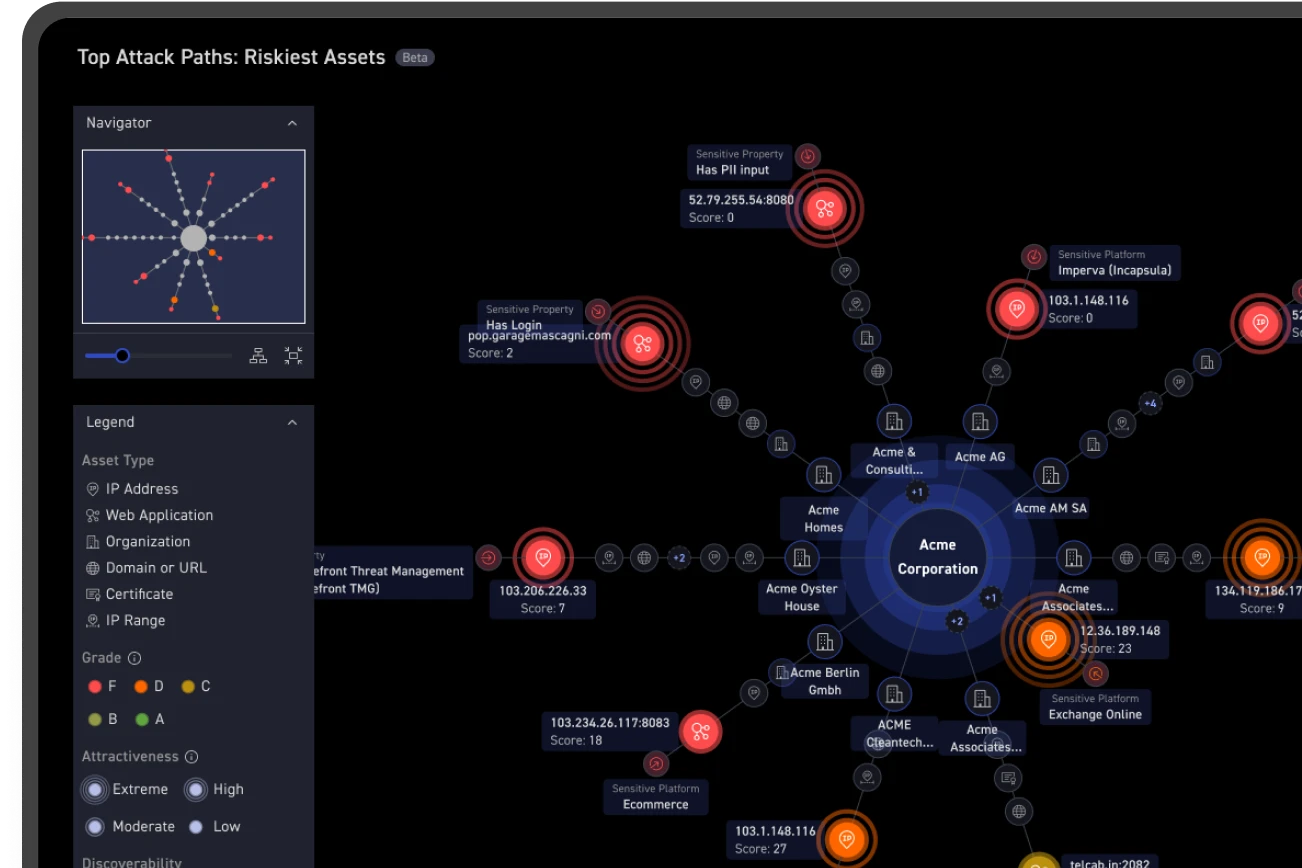
CyCognito provides continuous visibility into an organization’s full external attack surface, including unknown and unmanaged assets that commonly rely on shared libraries like OpenSSL. By identifying where cryptographic libraries are exposed through real-world attack paths, the platform helps teams understand which systems are realistically reachable by attackers.
Findings are prioritized based on business impact and exploitability, allowing security teams to focus remediation efforts where they matter most. CyCognito also enables verification of fixes and continuous monitoring to ensure that vulnerabilities such as CVE-2025-15467 do not reappear through configuration drift, redeployments, or newly exposed services.
To learn how CyCognito can help your organization reduce external exposure and manage emerging threats more effectively, contact us to request a demo.