
What is the Apache Traffic Server July 2026 security release?
The July 2026 Apache Traffic Server security release addresses a large batch of vulnerabilities across the proxy core and its plugin ecosystem, disclosed on July 29, 2026 and fixed in versions 9.2.15 and 10.1.4. Published counts of the batch differ. The Apache Traffic Server project describes the release as addressing 34 CVEs, while Belgium’s Centre for Cybersecurity puts the figure at 38 vulnerabilities.
The most severe entries carry CVSS v4.0 base scores of 9.2 (Critical): CVE-2026-58154, CVE-2026-58155, and CVE-2026-58161. All three are remotely reachable, require no privileges, and require no user interaction. CVE-2026-58151 follows at 8.7 (High). In the case of CVE-2026-58154, sending crafted HTTP headers is enough to crash the server.
Impact across the batch is dominated by denial of service and memory corruption rather than remote code execution. Several entries also break access control. CVE-2026-22068 allows a geo-control bypass, and CVE-2026-58159 allows an IP access control bypass. In a proxy tier, that class of flaw matters beyond availability, because the proxy is frequently the component enforcing the policy an attacker is trying to evade.
The plugin surface accounts for most of the batch. Named components include ts_lua (CVE-2026-58182, 8.6), header_rewrite (CVE-2026-58184, 8.3), the ESI plugin (CVE-2026-58178, 7.5), txn_box (CVE-2026-58180, 7.5), uri_signing and url_sig (CVE-2026-58181, 7.5), and the prefetch plugin (CVE-2026-58183, 5.9).
CVE-2026-58188, at 8.2, covers memory-safety and limit-bypass errors across several experimental plugins. Core paths are affected as well, including remap configuration handling (CVE-2026-58164, 7.5) and HostDB SRV record handling (CVE-2026-58175, 7.5).
What assets are affected by the July 2026 Apache Traffic Server CVEs?
The affected ranges span every recent branch: 8.0.0 through 8.1.9, 9.0.0 through 9.2.14, and 10.0.0 through 10.1.3. The CVE records for this batch direct users to 9.2.15 or 10.1.4, with no fixed release offered on the 8.x line.
In practice, an affected asset is a reverse proxy, forward proxy, or caching tier sitting in front of origin infrastructure. Apache Traffic Server is deployed at CDN edge, in front of media delivery platforms, and as an internal traffic router in large enterprises. It is built to terminate untrusted traffic, so it is internet-facing by function rather than by misconfiguration.
Real exposure depends heavily on which plugins are loaded. An instance running only core proxy features is exposed to a narrower slice of this batch than one running ts_lua, ESI, or header_rewrite. That distinction matters for triage, and it is not visible from outside. Version fingerprinting will tell a defender whether an instance falls inside the affected ranges. It will not tell them which plugins are active.
What does our data show about exposure patterns?
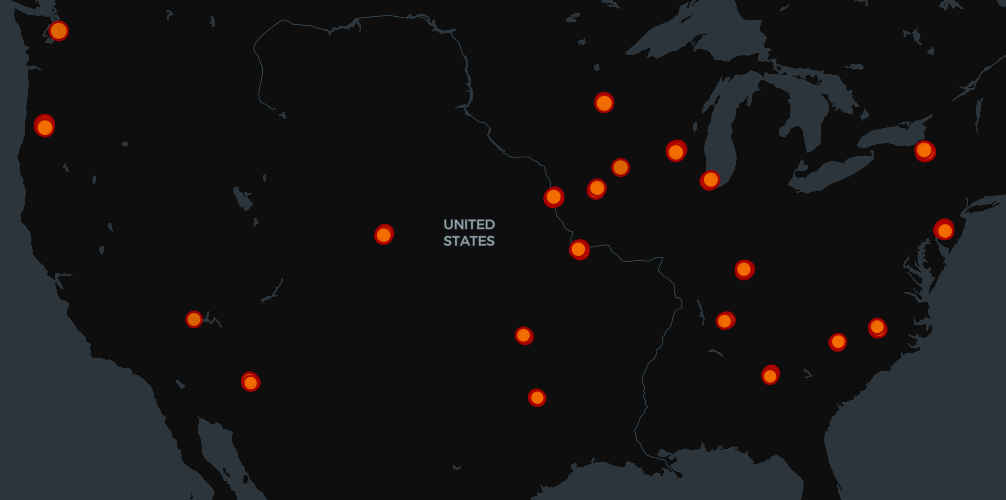
Exposure in this set is led by Communication Services at 52.8% of observed assets, with Information Technology contributing 44.4%. Together the two sectors account for more than 97% of the externally reachable Apache Traffic Server instances identified.
That concentration follows the software’s purpose. Apache Traffic Server was built for high-volume content delivery, and the organizations running it at scale are media, entertainment, and telecommunications providers, alongside the technology vendors that operate their own edge infrastructure.
These are also environments with large, geographically distributed footprints, multiple delivery tiers, and long-lived caching infrastructure that tends to be upgraded on its own schedule rather than alongside the application estate behind it.
Across sectors, the pattern points to a consistent driver. Caching and proxy tiers are treated as network plumbing rather than as application software. They are provisioned once, tuned for throughput, and left alone. In this data set, every instance where a version could be fingerprinted was running a release inside the affected ranges, including versions several minor releases behind the current line.
A proxy that has been quietly doing its job for years is exactly the asset least likely to surface in a patch cycle.
Are fixes available?
Yes. The Apache Traffic Server project has released versions 9.2.15 and 10.1.4, and the CVE records for this batch consistently direct users to one of those two versions.
There is no fix on the 8.x line. Instances running 8.0.0 through 8.1.9 require a branch migration, which for plugin-heavy deployments means recompiling user-written plugins against the newer API rather than applying a drop-in package upgrade. That work is worth scoping now rather than discovering it mid-incident.
Reporting on the size of this release is not consistent, with published counts ranging from 34 to 38 entries, and distribution packages will lag upstream by days or weeks. Defenders should verify the fixed version directly against the Apache Traffic Server advisory and their own distribution tracker rather than assuming a fix has reached their package repository.
Are there any other recommended actions to take?
Until upgrades are complete, defenders should:
- Inventory all Apache Traffic Server instances and record the running version
- Enumerate loaded plugins in
plugin.configandremap.configfor each instance - Unload experimental and unused plugins to shrink the exposed surface
- Verify geo and IP access control rules are enforced at a second layer
- Monitor proxy processes for unexpected restarts, crashes, and memory growth
- Restrict management and administrative interfaces to trusted networks only
How can CyCognito help your organization?
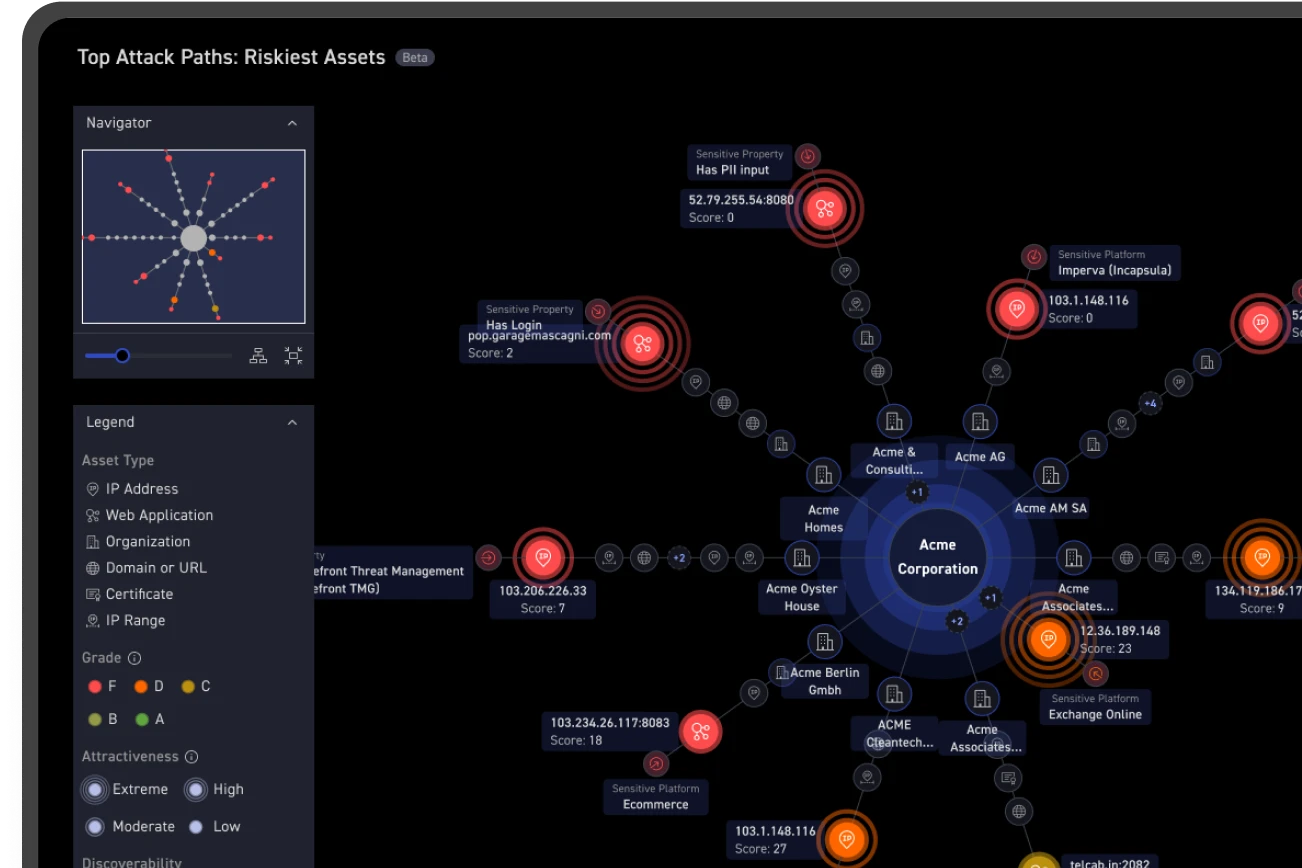
CyCognito published an Emerging Threat Advisory for the Apache Traffic Server July 2026 security release in the CyCognito platform and is actively researching enhanced detection capabilities for these vulnerabilities.
To learn how CyCognito can help your organization reduce external exposure and manage emerging threats more effectively, contact us to request a demo.