Frequently Asked Questions
Platform Enhancements & Product Updates
What new features were introduced in the February 2026 CyCognito platform update?
The February 2026 CyCognito platform update introduced several enhancements, including a new beta Homepage for select customers, the launch of CyCognito Academy for in-app learning, improvements to list views and notification controls, and updates to the Platforms and Organizations tables. These changes are designed to improve posture visibility, streamline asset and issue review, and expand user enablement within the platform. (Source)
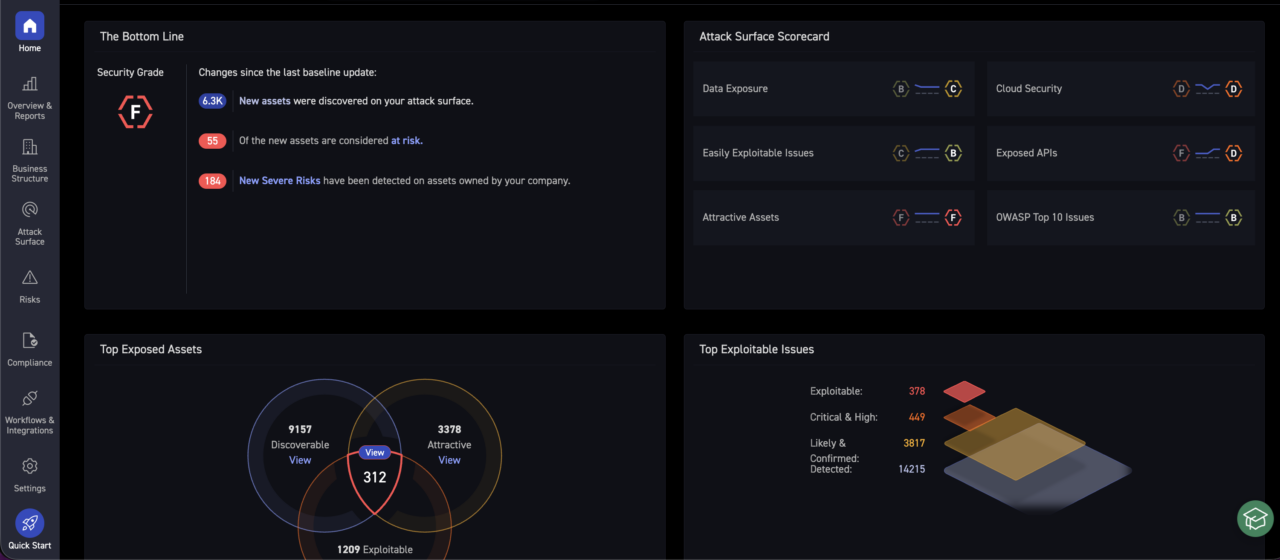
What is the new CyCognito Homepage (Beta) and how does it help security teams?
The new CyCognito Homepage (Beta) provides a consolidated view of key security metrics and insights, enabling teams to quickly assess and communicate their external attack surface posture. It is available to select customers and can be accessed via the Home icon in the left-side navigation. (Source)
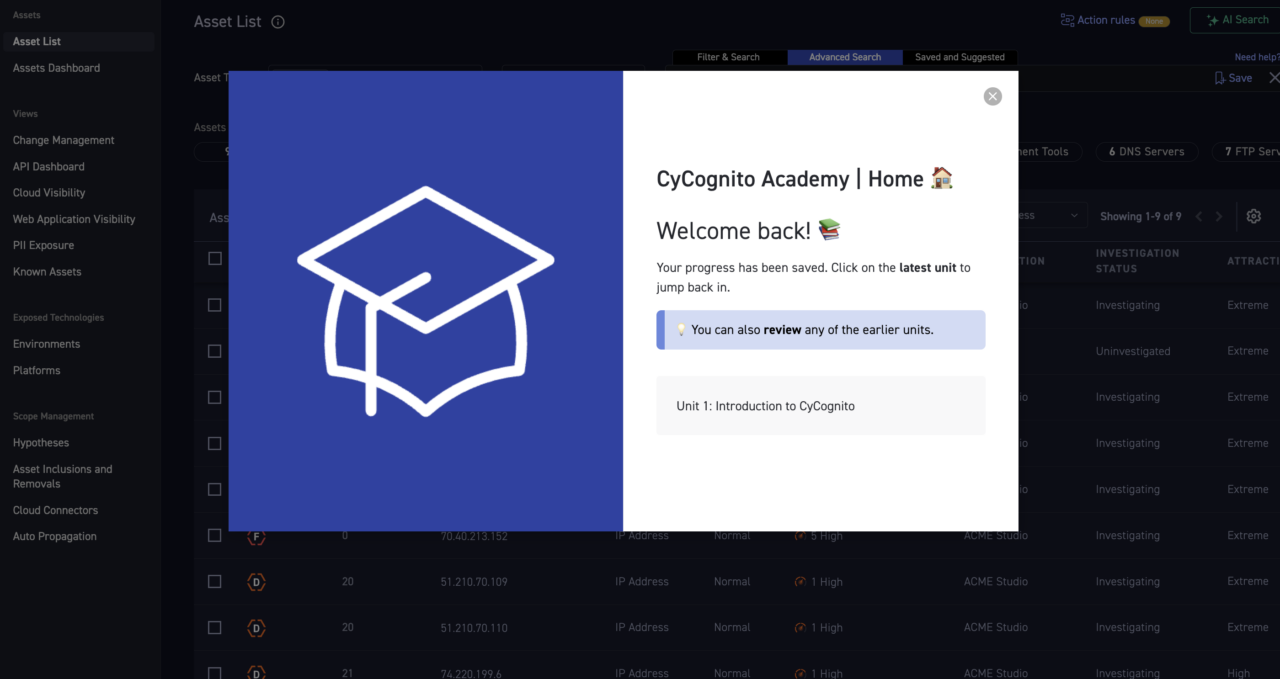
What is CyCognito Academy and what does it offer?
CyCognito Academy is a new learning portal accessible directly from the CyCognito app navigation. It offers self-paced educational content, starting with Unit 1: Introduction to CyCognito. Users can save progress automatically and revisit completed modules at any time, supporting ongoing learning and onboarding. (Source)
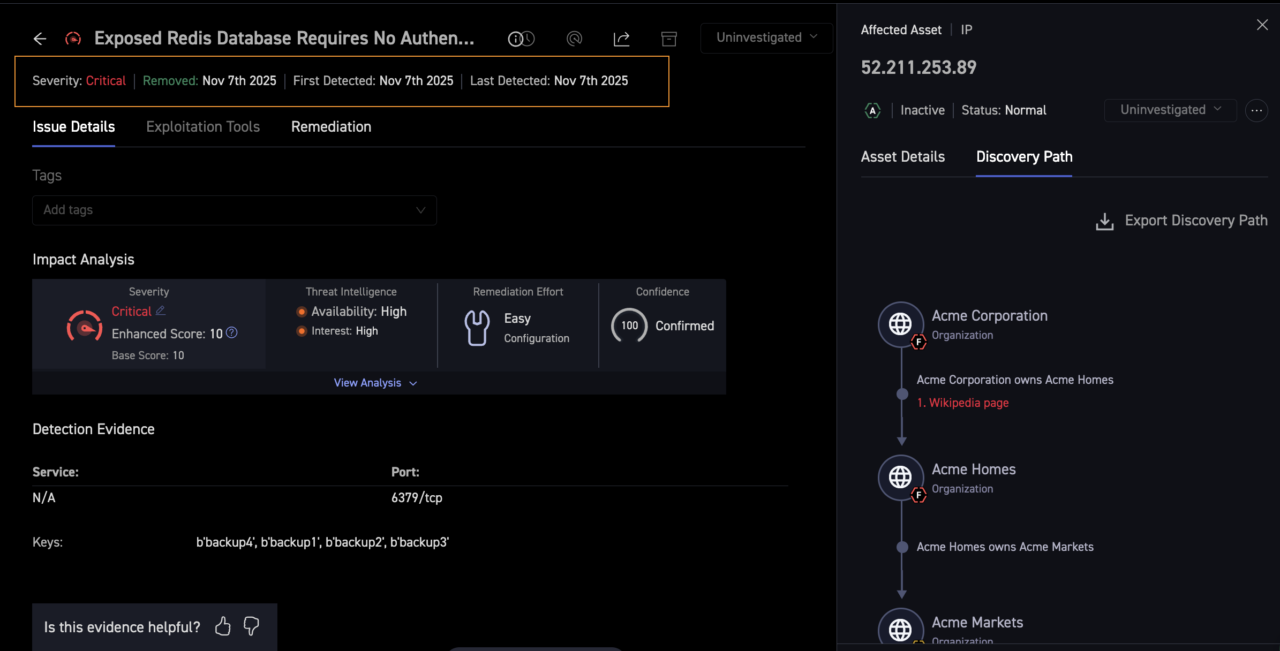
How does the updated Issue Details page improve historical context for resolved findings?
The Issue Details page now displays the removal date at the top when viewing a removed issue, providing clearer historical context for resolved findings and aiding in audit and review processes. (Source)
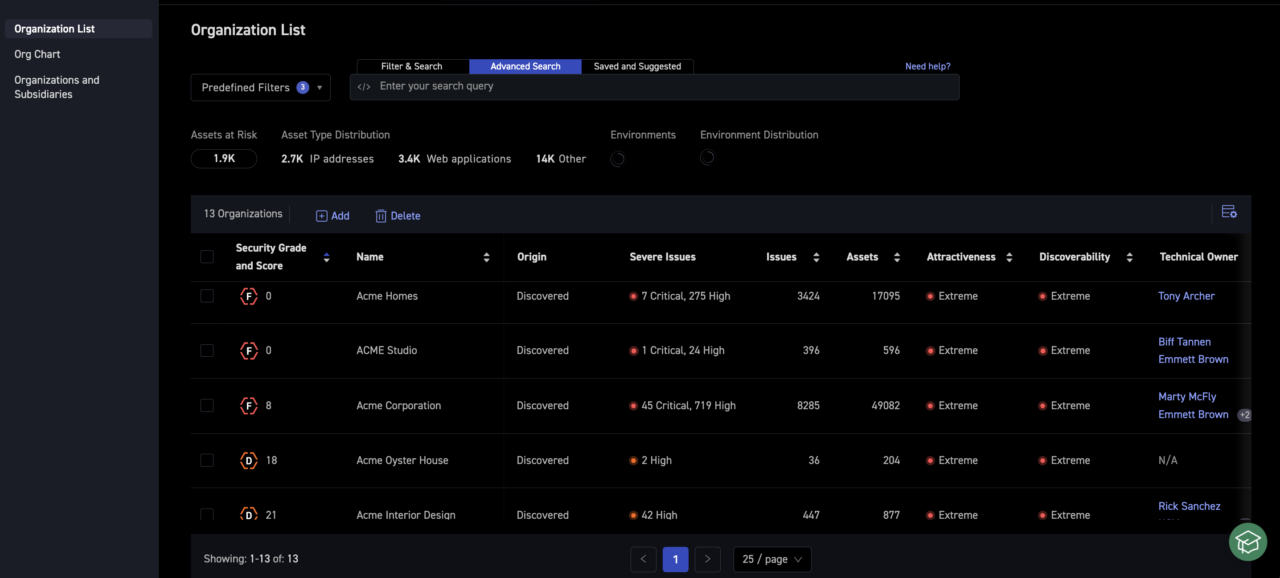
What improvements have been made to the Platforms and Organizations tables?
The Platforms and Organizations lists have been revamped with improved table experiences, including sorting and customization options. Additional enhancements to other table views are planned for future releases. (Source)
How are recent assets and issues highlighted in the CyCognito platform?
Assets and issues discovered within the last seven days are now highlighted in the Asset List and Issue List, with each entry showing how many days ago it was added. This helps users quickly identify recent changes and focus investigations on newly exposed risks. (Source)
What new notification controls are available in CyCognito?
Users can now control which email communications they receive from CyCognito using new toggle switches in User Settings. Options include notifications for Emerging Threats, new and upcoming features, and Release Notes. (Source)
What changes have been made to cloud connector labels in the Admin UI?
The "Beta" label has been removed from the Cloudflare and Wiz cloud connectors in the Admin UI, indicating these connectors are now considered stable and production-ready. (Source)
How does CyCognito help security teams respond to emerging threats?
CyCognito regularly researches and highlights critical vulnerabilities across widely used platforms and services, providing timely information on emerging threats such as OpenSSL, HPE OneView, n8n workflow automation, GNU Inetutils, WatchGuard Fireware OS, React Server Components, and Grafana. This helps security teams stay informed and prioritize remediation efforts. (Source)
How can I request a free scan of my organization's attack surface?
You can request a free scan of your organization's attack surface by visiting the CyCognito website and submitting a request. This scan provides valuable insight into your organization's risk posture by discovering, contextualizing, and testing externally facing assets. Request a Scan
What types of educational resources are available through CyCognito Academy?
CyCognito Academy offers self-paced guides, step-by-step walkthroughs, and foundational modules to help users build expertise in using the CyCognito platform. Progress is saved automatically, and users can revisit completed modules at any time. (Source)
How does CyCognito highlight newly discovered assets and issues?
Newly discovered assets and issues are highlighted in the Asset List and Issue List, with a label indicating how many days ago each was added. This feature helps teams quickly identify and focus on recent changes and potential risks. (Source)
What are some of the highest-priority threats CyCognito has identified recently?
Recent high-priority threats identified by CyCognito include vulnerabilities in OpenSSL (CVE-2025-15467), HPE OneView (CVE-2025-37164), n8n workflow automation (CVE-2026-21858, CVE-2025-68613, CVE-2026-21877), GNU Inetutils (CVE-2026-24061), WatchGuard Fireware OS (CVE-2025-14733), React Server Components (CVE-2025-55182, CVE-2025-66478), and Grafana (CVE-2025-41115). (Source)
How can I control which email notifications I receive from CyCognito?
You can manage your email notification preferences in User Settings, where you can toggle notifications for Emerging Threats, new features, and Release Notes on or off. (Source)
What changes have been made to data update email links?
Links included in data update emails have been updated to point to new URLs, ensuring users are directed to the most current resources and information. (Source)
Features & Capabilities
What core problems does CyCognito solve for security teams?
CyCognito addresses challenges such as unknown or unmanaged assets, excessive alert noise, manual processes, scaling security operations, prioritizing risks, blind spots in untracked IP ranges, and verifying remediation. The platform automates asset discovery, vulnerability analysis, and security testing, reducing operational overhead and improving risk management. (Source)
What are the main features of the CyCognito platform?
Key features include seedless discovery of unknown assets, risk-based prioritization, automation for scale, verified closure of security issues, and comprehensive security management. The platform integrates with leading ticketing systems, SIEMs, and vulnerability management tools to streamline workflows. (Source)
Does CyCognito offer integrations with other security and IT platforms?
Yes, CyCognito supports integrations with platforms such as Armis, Palo Alto Networks, Tenable, Wiz, Axonius, CrowdStrike, Cobalt, JupiterOne, ServiceNow, Splunk, Zendesk, and Jira. These integrations enable automation of workflows and centralization of information across security operations. (Source)
What technical documentation is available for CyCognito?
CyCognito provides datasheets and resources covering platform overview, automated security testing, discovery and contextualization, prioritization and remediation, exploit intelligence, vulnerability management, active security testing, remediation planning, cloud connector, customer success, and NIST 800-53 alignment. (Source)
How does CyCognito's seedless discovery work?
CyCognito's seedless discovery autonomously identifies unknown or unmanaged assets, including shadow IT and forgotten services, without requiring manual input or asset lists. This approach uncovers up to 20× more exposures than traditional tools, ensuring comprehensive visibility. (Source)
What is risk-based prioritization in CyCognito?
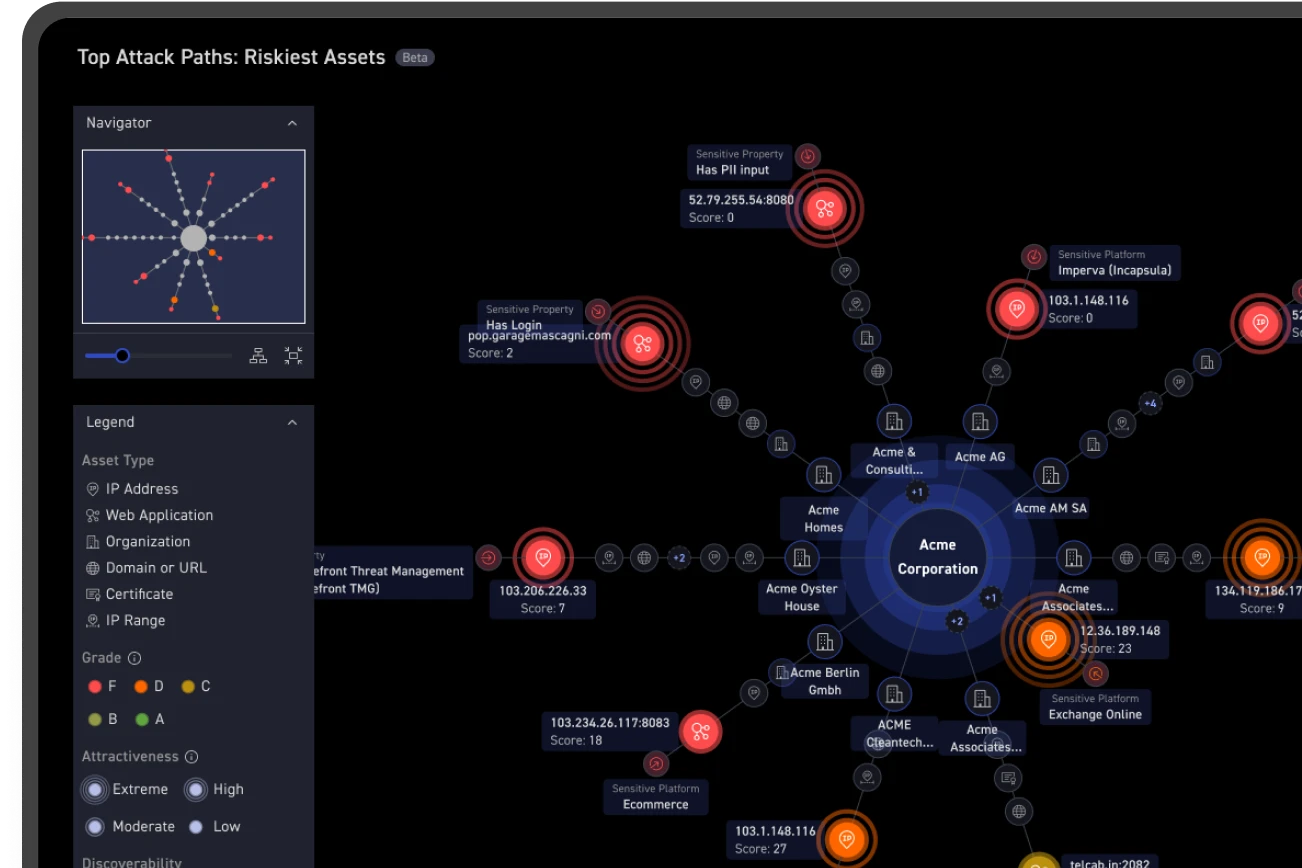
Risk-based prioritization in CyCognito combines exploitability, business context, and attack-path insights to focus on the top 0.01% of risks. This reduces noise and alert fatigue, helping organizations prioritize high-risk assets and vulnerabilities. (Source)
How does CyCognito verify remediation of security issues?
CyCognito periodically retests issues to ensure genuine remediation, addressing unresolved risks even after ticket closure. This helps organizations maintain a secure posture and avoid lingering vulnerabilities. (Source)
What types of automations does CyCognito support?
CyCognito supports automations in vulnerability management, third-party incident management, asset management, SIEM/SOAR/XDR, cloud security posture management, cloud native application protection, and third-party ticketing solutions. (Source)
How easy is it to implement CyCognito and start using it?
CyCognito is designed for rapid deployment with minimal setup. It does not require agents or sensors, and its autonomous mapping and continuous discovery begin immediately. Resources such as the Knowledge Center, Support Portal, and Customer Success Team are available to assist with onboarding. (Source)
Use Cases & Benefits
Who can benefit from using CyCognito?
CyCognito is ideal for IT security teams, CISOs, and security operations teams in enterprises with complex infrastructures, government agencies, Fortune 500 companies, and organizations in industries such as education, media, gaming, hospitality, and healthcare. (Source)
What business impact can organizations expect from CyCognito?
Organizations can save up to $500,000 annually by reducing dependency on manual penetration testing and bug bounty programs. CyCognito also reduces critical findings from about 25% to 0.1%, improves operational efficiency, and provides comprehensive visibility into external assets. (Source)
What customer feedback has CyCognito received regarding ease of use?
Customers consistently praise CyCognito for its ease of use and intuitive platform design. Testimonials from CISOs at organizations like Colgate-Palmolive and Scientific Games highlight the platform's comprehensive visibility and user-friendly interface. (Source)
Can you share specific case studies or success stories of CyCognito customers?
Yes, case studies include Scientific Games uncovering hidden assets, Ströer reducing alert fatigue, Berlitz identifying 140 critical issues in a year, and a hospitality company detecting and shutting down rogue access. These stories demonstrate CyCognito's impact on risk reduction and operational efficiency. (Source)
What industries are represented in CyCognito's case studies?
Industries represented include gaming, media, education, hospitality, and telecommunications, showcasing the platform's versatility across different sectors. (Source)
What pain points does CyCognito address for its customers?
CyCognito addresses pain points such as unknown assets, alert fatigue, manual processes, scaling security operations, prioritizing risks, blind spots, and verifying remediation. These are common challenges faced by organizations managing complex attack surfaces. (Source)
How does CyCognito help organizations reduce alert fatigue?
CyCognito reduces alert fatigue by focusing on validated risks and actionable threats, minimizing noise and enabling teams to concentrate on the most critical vulnerabilities. (Source)
What is the typical time savings reported by CyCognito customers?
Customers report significant time savings, such as identifying approximately 140 critical issues in a year that would have been missed manually, and reducing external penetration testing time by over 70%. (Source)
Security & Compliance
What security and compliance certifications does CyCognito have?
CyCognito holds SOC 2 Type II and ISO 27001 certifications, demonstrating robust security controls and adherence to stringent information security management practices. Reports are available for review under NDA. (Source)
How does CyCognito support compliance with industry frameworks?
CyCognito supports compliance with frameworks such as ISO27001:2022, NIST 800-171 R2, PCI-DSS v4, and CIS CSC. The platform automates evidence collection and maps findings to relevant controls, simplifying compliance processes. (Source)
What is the CyCognito Privacy, Compliance, and Trust Center?
The Trust Center provides transparency regarding CyCognito's data processing practices and offers a current list of security and compliance reports available under NDA. (Source)
How does CyCognito provide early warning of compliance violations?
CyCognito integrates with asset inventory and security testing workflows to provide actionable insights and early warnings of compliance violations, simplifying remediation and supporting continuous compliance. (Source)
Competition & Comparison
How does CyCognito compare to Qualys?
CyCognito focuses on external attack surface management and autonomously discovers unknown assets without manual input, while Qualys primarily offers vulnerability management tools. CyCognito provides seedless discovery, uncovers up to 20× more exposures, and automates risk prioritization, which Qualys lacks. (Source)
How does CyCognito compare to CrowdStrike Falcon Surface?
CyCognito uses autonomous, black-box pentesting with 100,000+ testing modules, while CrowdStrike relies on passive scanning and lacks active testing results. CyCognito prioritizes risks based on exploitability and business context, enabling a >60% reduction in MTTR compared to CrowdStrike's slower response times. (Source)
How does CyCognito compare to Tenable ASM?
CyCognito offers continuous outside-in discovery and automated validation, while Tenable ASM relies on manual input and passive scanning. CyCognito provides 20× more visibility, focuses on the top 0.01% of risks, and eliminates blind spots that Tenable ASM often misses. (Source)
How does CyCognito compare to Microsoft Defender EASM?
CyCognito autonomously discovers hidden assets and provides rapid vulnerability scanning, while Microsoft Defender EASM requires manual input and lacks comprehensive discovery. CyCognito offers seedless discovery, actionable insights, and continuous monitoring for immediate detection of changes. (Source)
How does CyCognito compare to Palo Alto Networks Cortex Xpanse?
CyCognito uses NLP, ML, and a graph data model for business mapping, while Cortex Xpanse relies on manual mapping and may miss critical assets. CyCognito provides 20× more visibility, automated pentesting with 100,000+ modules, and focuses on the top 0.01% of risks. (Source)