
For years, security programs reported progress using the same familiar metrics: number of vulnerabilities, patch rates, backlog size. These metrics became the default scorecard not because they reflected risk, but because they were easy to produce.
The problem is that these metrics do not measure security improvement. They measure activity. Vulnerability counts rise and fall with scan cadence. Patch rates spike around maintenance windows. Backlogs grow when coverage improves. None of these movements reliably indicate whether the organization is more exposed or less.
Despite this, these numbers were repeatedly presented to leadership as evidence of control. Over time, they trained executives to associate higher volume with higher risk and more remediation with better security. That assumption is wrong, and it is one of the reasons vulnerability management has struggled to scale.
Continuous Threat Exposure Management (CTEM) starts from a different premise: reducing exposure requires prioritizing impact, not counting findings. That shift forces a change not only in how security teams operate, but in what they measure and report.
In the first post of this series, we outlined what CTEM is and why traditional vulnerability management struggles to reduce exposure at scale. The next implication is unavoidable: if the operating model changes, the metrics must change with it.
If you want to learn more about these topics, check out other blogs in this series:
- Taking the Guesswork Out of CTEM
- Permission to Ignore: Leveraging the CTEM Framework to Focus on Real Risk
What Changes in the Boardroom
Traditional vulnerability KPIs focus on volume and throughput: total open CVEs, percentage patched, backlog size. These metrics fluctuate constantly and require continuous explanation. More importantly, they rarely answer the question leadership actually cares about: are we reducing material exposure?
CTEM makes volume-based KPIs unusable at the executive level:
- Total open vulnerabilities
Grows with coverage, not risk. - Percentage of vulnerabilities patched
Rewards throughput over impact. - Vulnerability backlog size
Fluctuates with scanning and scope changes. - Number of findings per scan or test
Measures tool output, not security improvement.
Reporting shifts from activity to decision quality. KPIs reflect whether teams are focusing on the right issues, spending effort efficiently, and maintaining continuous pressure on assets that matter to the business.
Three KPIs That Show the Shift
1. Issues Requiring Action
What changed : Measurement focuses on urgent issues that require immediate action, rather than tracking every vulnerability discovered.
Traditional vulnerability management relies heavily on severity scoring to drive prioritization. Over time, it became clear that severity alone is not enough. Many high-severity vulnerabilities are not reachable, not exploitable, or not relevant to critical assets. Treating them as urgent creates noise and wastes effort.
CTEM introduces validation. Issues escalate only when there is evidence that an attacker can realistically exploit them on assets that matter. Everything else is handled through normal hygiene processes.
This creates a clear decision boundary. If an issue is not validated as exploitable and relevant, it does not belong in executive reporting.
Win looks like: Reducing the problem space to a few hundred validated, truly critical issues across tens to low hundreds of critical assets.
2. Team Hours Spent on Remediation
What changed : Measurement centers on the time engineering and operations teams spend on urgent remediation work, rather than how many issues were closed.
Traditional vulnerability programs reward throughput. Closing more high-severity findings is treated as progress, regardless of how much disruption it causes. This hides the real cost of security. Every urgent escalation pulls engineers away from planned work and forces trade-offs that leadership rarely sees.
When too many escalations turn out to be low impact, teams adapt. They slow down responses, push back on deadlines, and wait for confirmation before acting. Over time, security loses its ability to trigger fast action when it actually matters.
CTEM makes that cost visible. By measuring remediation hours, security leaders can see whether prioritization is improving or whether the program is simply generating more work.
Win looks like: A sustained 60 to 80 percent reduction in engineering and operations hours spent on emergent remediation, without an increase in exposure.
3. Continuous Testing Coverage of Critical Assets
What changed: Coverage is defined by adherence to a testing cadence SLA for a defined set of critical assets, rather than reliance on periodic, point-in-time assessments.
Traditional security testing emphasizes episodic depth. Annual penetration tests and periodic red team exercises provide insight at a moment in time, but they do not establish sustained coverage. Between testing windows, assets change, configurations drift, and new exposure paths emerge without visibility.
CTEM reframes coverage as a commitment. Each critical asset has a defined testing cadence, and coverage is measured by whether that cadence is met. If an asset falls out of compliance, coverage is broken, regardless of how comprehensive the last test was.
This shifts the question from “What did we test?” to “Which critical assets are currently validated?”
Win looks like: Continuous compliance with testing SLAs across the critical asset set, with no unvalidated gaps.
Making It Work in Practice
CTEM forces a change in how security performance is measured. Volume-based KPIs such as total vulnerabilities, patch rates, and backlog size track activity, not exposure. They fluctuate constantly and do not indicate whether risk is increasing or decreasing.
CTEM replaces these metrics with a smaller set of outcome-driven KPIs:
- How many validated issues actually require action
- How much engineering time is consumed by urgent remediation
- Whether critical assets are continuously tested on a defined cadence
When these KPIs improve, exposure is being reduced. When they do not, security effort is being wasted, regardless of how much activity is reported.
Most organizations start with external exposure because that is where attackers start. Externally reachable assets change frequently, are often poorly inventoried, and create the most direct path to material risk. If teams cannot see what is reachable from the outside, prioritization is based on assumptions rather than evidence.
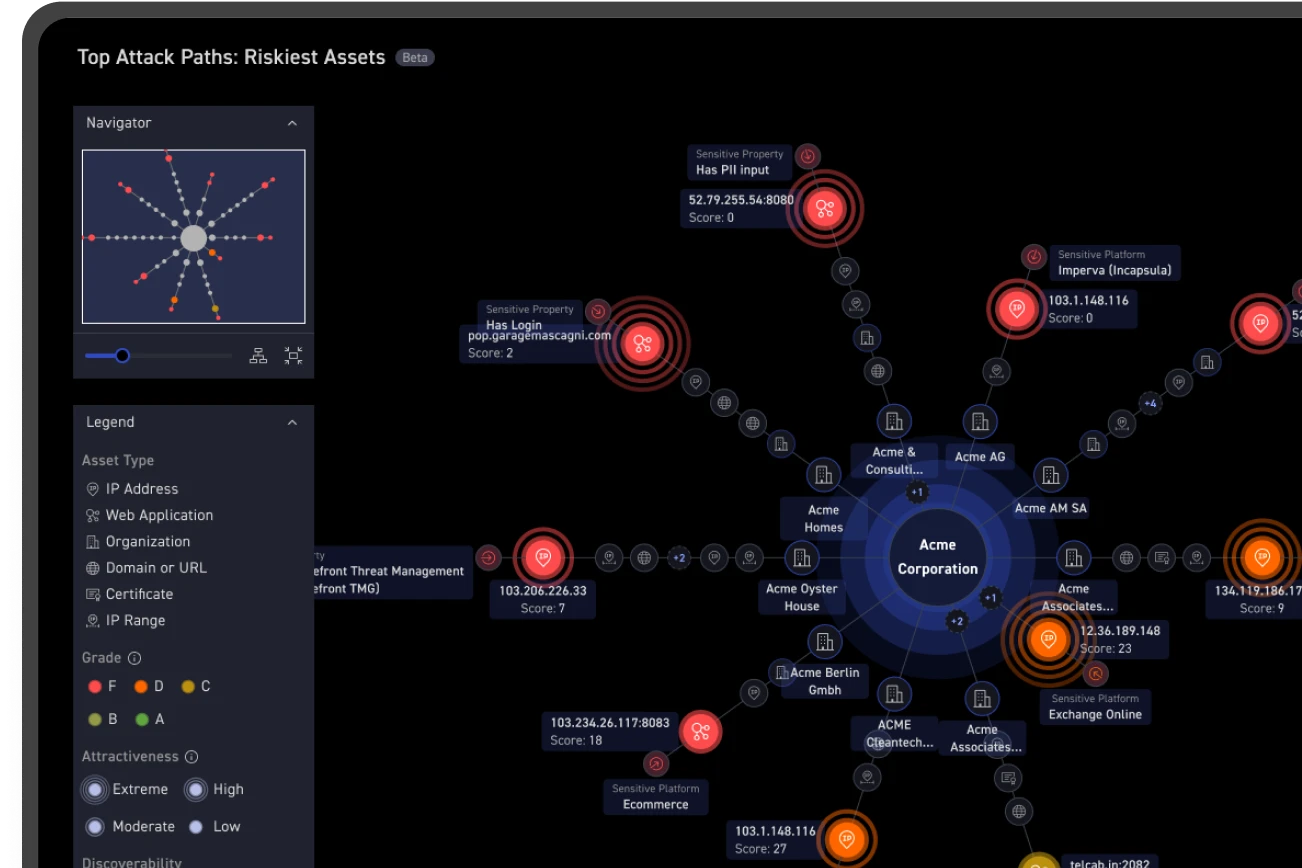
At CyCognito, we help security teams operationalize CTEM by grounding measurement in attacker reality. Our platform continuously discovers externally reachable assets, validates exploitability through active testing, and ties findings directly to asset ownership and remediation effort. This makes it possible to sustain the KPIs that CTEM requires, not just report on them.
The result is a security program that escalates less, prioritizes with evidence, and maintains credibility with engineering and business teams. Exposure is reduced without turning security into constant noise.
Want to see what this looks like in your environment? Schedule time with a CyCognito expert to walk through your external attack surface and discuss how CTEM can work for your organization.