
What is CVE-2025-14733?
CVE-2025-14733 is a high-severity authentication bypass vulnerability affecting a widely deployed enterprise firewall used to manage administrative and API access. The flaw allows attackers to bypass authentication controls under specific conditions by manipulating request parameters and session handling logic.
The vulnerability stems from improper validation of authentication state during certain request flows, particularly when optional parameters or alternate authentication paths are used. An attacker can craft a request that appears authenticated to the backend service even though no valid credentials were supplied.
When successfully exploited, CVE-2025-14733 enables unauthenticated access to protected functionality that should only be available to authenticated users or administrators.
What assets are affected by CVE-2025-14733?
CVE-2025-14733 affects organizations running internet-facing instances of the impacted platform, especially those that expose:
- Web-based administrative interfaces
- Public or partner-facing APIs
- Management consoles used for configuration or user administration
- Cloud-hosted services relying on the vulnerable authentication flow
Assets at highest risk include:
- Externally accessible admin portals
- Applications using the affected platform as an identity or access gateway
- Systems that assume upstream authentication enforcement
- Environments where authentication logic is shared across multiple services
Because the flaw exists in the authentication layer itself, traditional perimeter defenses may not detect exploitation attempts, particularly if the crafted requests appear syntactically valid.
Are fixes available?
Yes. The vendor has released patched versions that correct the authentication logic and ensure authentication state is validated consistently across all request paths.
Organizations should:
- Upgrade to the latest patched version immediately
- Ensure all instances—production, staging, and development—are updated
- Remove or restrict access to legacy authentication endpoints if no longer required
There are no reliable configuration-only workarounds that fully mitigate the issue without applying the vendor fix. Patching is required to eliminate the bypass condition.
Are there any other recommended actions to take?
In addition to patching, security teams should take the following steps:
- Identify all external assets using the affected platform
This includes forgotten admin portals, test environments, and subsidiary-owned systems. - Review authentication logs
Look for:- Access to privileged endpoints without corresponding login events
- Anomalous API usage patterns
- Requests containing unusual or undocumented parameters
- Restrict access to administrative interfaces
Where possible, limit access by IP, network segmentation, or additional authentication layers. - Enforce defense-in-depth controls
Backend services should validate authorization independently rather than relying solely on upstream authentication. - Monitor for post-exploitation activity
Attackers may use initial access to create new users, modify permissions, or establish persistence.
These actions help reduce risk while patches are deployed across large or distributed environments.
Is CVE-2025-14733 being actively exploited?
As of December 4, 2025, there are no confirmed large-scale exploitation campaigns publicly reported. However:
- Proof-of-concept techniques demonstrating authentication bypass have been documented by researchers
- Attackers commonly target authentication flaws due to their reliability and high impact
- Internet scanning activity targeting affected platforms has increased following disclosure
Given the simplicity of exploiting authentication logic flaws and their value to attackers, organizations should assume active probing is occurring and treat remediation as urgent.
How is CyCognito helping customers identify assets vulnerable to CVE-2025-14733?
CyCognito published an Emerging Threat Advisory for CVE-2025-14733 inside the CyCognito platform on December 4th, 2025, and is actively researching enhanced detection capabilities for this vulnerability. The platform already surfaces externally exposed assets tied to the affected technology stack, helping customers quickly understand which systems may be at risk.
CyCognito advises customers to review any externally accessible authentication portals, management interfaces, or APIs associated with this platform to assess potential exposure—even if those systems are not explicitly identified as running vulnerable versions. Authentication components are often reused across environments, increasing the likelihood of hidden exposure.
Check out CyCognito’s Emerging Threats page for updates on this and other critical vulnerabilities.
How can CyCognito help your organization?
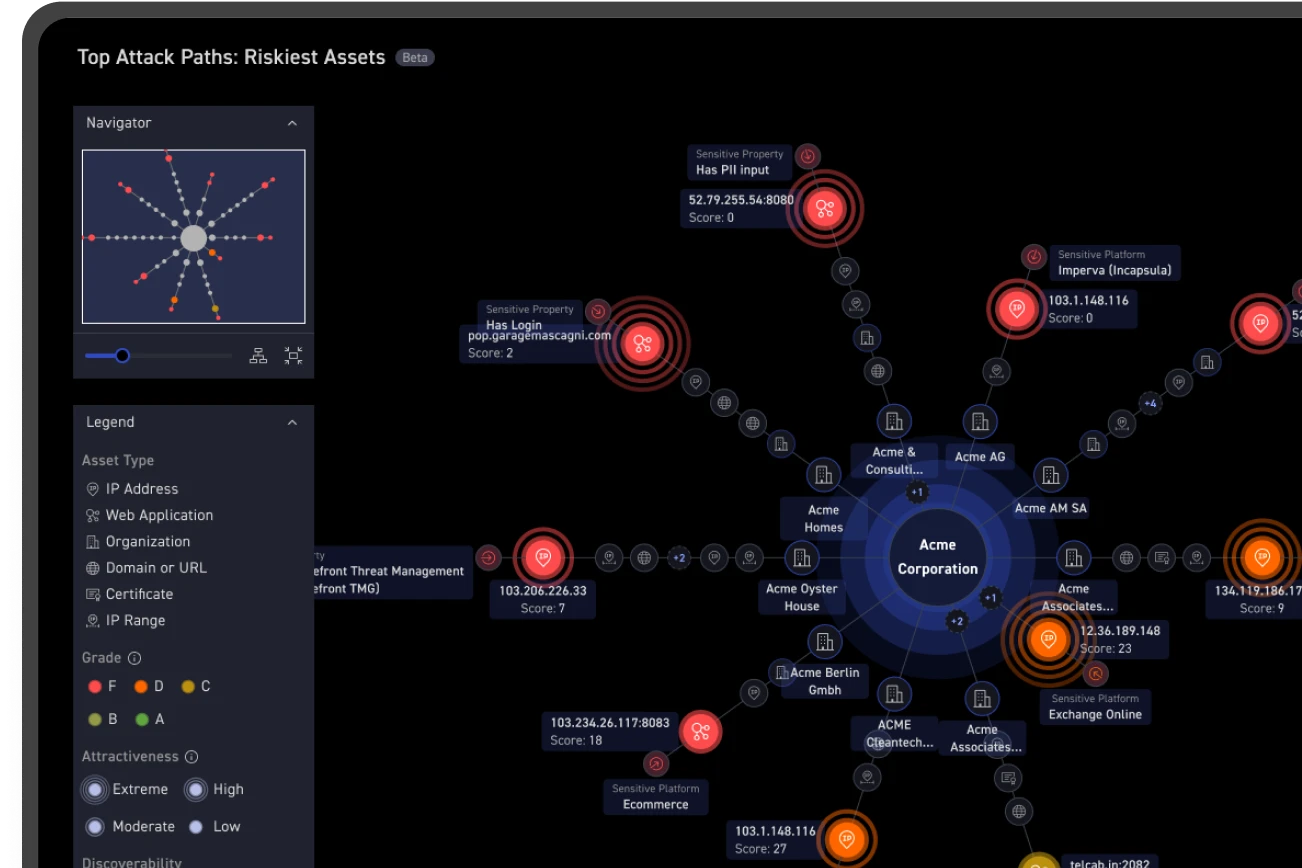
CyCognito gives security teams a clear view of every external asset, including systems they may not know exist. That visibility makes it easier to find applications affected by CVE-2025-14733 and understand which ones expose authentication surfaces to the internet. Instead of working through large, noisy alert lists, teams see which systems matter most based on business impact and real-world attack paths.
CyCognito also helps verify that the issue is fixed and continues monitoring for changes as environments evolve. If a previously internal system becomes externally accessible, or if a vulnerable authentication endpoint appears in a new deployment, the platform flags it before attackers find it. This helps organizations move faster, reduce risk with confidence, and stay ahead of attackers rather than reacting after the fact.
To learn more CyCognito, schedule a tech demo here to see it in action.