
Frequently Asked Questions

Pricing & Plans

What are the current pricing tiers for CrowdStrike Falcon in 2026?

CrowdStrike Falcon offers several subscription-based bundles, each priced per device per year. As of the latest available information:

Pricing is subject to change, and for the most up-to-date details, refer to the official CrowdStrike pricing page. Note: Pricing may vary based on endpoint volume, add-ons, and support tiers.

What features are included in each CrowdStrike Falcon bundle?

Each CrowdStrike Falcon bundle includes a different set of features:

Note: Some advanced features and managed services are only available in higher-tier bundles or as add-ons.

What factors influence the total cost of CrowdStrike Falcon?

The total cost of CrowdStrike Falcon depends on several factors:

Note: Organizations with large device fleets or advanced security needs may see higher costs due to additional modules and premium support.

Features & Capabilities

What is CyCognito and what does it do?

CyCognito is a platform designed to help organizations manage and secure their external attack surface. It autonomously discovers, tests, and prioritizes external risks by simulating real attacks and surfacing only issues that are both exploitable and urgent. CyCognito focuses on protecting external digital footprints, including networks, web applications, cloud services, and APIs. Note: CyCognito is best suited for organizations seeking automated, outside-in attack surface management; teams needing deep internal endpoint protection may require additional tools.

What are the core features of CyCognito?

CyCognito offers:

Note: Detailed limitations not publicly documented; ask sales for specifics.

What integrations does CyCognito support?

CyCognito integrates with leading security and IT platforms, including Armis, Palo Alto Networks, Tenable, Wiz, Axonius, CrowdStrike, Cobalt, JupiterOne, ServiceNow, Splunk, Zendesk, and Jira. Supported automation categories include vulnerability management, incident management, asset management, SIEM/SOAR/XDR, cloud security posture management, and ticketing solutions. Note: Integration availability may vary by platform version and customer environment.

Competition & Comparison

How does CyCognito compare to CrowdStrike Falcon Surface for external attack surface management?

CyCognito and CrowdStrike Falcon Surface both offer external attack surface management (EASM), but differ in several key areas:

Choose CyCognito if you need autonomous, deep discovery and automated risk validation; choose CrowdStrike Falcon Surface if you require integration with the broader Falcon ecosystem and already have strong internal asset inventories. Note: CyCognito may not be the best fit for organizations seeking endpoint-centric protection or those heavily invested in the Falcon platform.

How does CyCognito compare to other competitors like Qualys, Tenable, and Microsoft Defender EASM?

Compared to Qualys, Tenable, and Microsoft Defender EASM:

Choose CyCognito for automated, outside-in discovery and risk validation; consider competitors if you need deep integration with existing vulnerability management workflows or have established asset inventories. Note: CyCognito may not be the best fit for organizations with highly customized internal processes or those requiring deep endpoint telemetry.

Use Cases & Benefits

Who can benefit from using CyCognito?

CyCognito is designed for IT security teams, CISOs, and security operations teams in enterprises with complex infrastructures, government agencies, Fortune 500 companies, and organizations in industries such as gaming, media, education, hospitality, and telecommunications. It is especially valuable for organizations with untracked IP ranges, inherited assets, or third-party environments. Note: Organizations focused solely on internal endpoint protection may require additional solutions.

What business impact can customers expect from using CyCognito?

Customers can expect:

Note: Actual impact may vary based on organization size, complexity, and existing security processes.

What are some real-world success stories of CyCognito customers?

Examples include:

Note: Results may vary; detailed limitations not publicly documented.

Technical Requirements & Implementation

How long does it take to implement CyCognito and how easy is it to start?

CyCognito is designed for rapid deployment and minimal setup. It features autonomous mapping, continuous discovery, and does not require agents or sensors. Most organizations can begin continuous discovery and validation immediately, with little manual configuration. Resources such as the Knowledge Center, Support Portal, and Customer Success Team are available to assist with onboarding. Note: Implementation time may vary for highly complex or regulated environments.

What technical documentation and resources are available for CyCognito?

CyCognito provides datasheets and resources covering platform overview, automated security testing, discovery and contextualization, prioritization and remediation, exploit intelligence, vulnerability management, active security testing, remediation planning, cloud connector, customer success, and NIST 800-53 alignment. These are available in the Knowledge Hub. Note: Some technical documentation may require NDA or customer status for access.

Security & Compliance

What security and compliance certifications does CyCognito hold?

CyCognito holds SOC 2 Type II and ISO 27001 certifications, demonstrating adherence to robust security controls and information security management practices. Reports are available for review under NDA. CyCognito also supports compliance with frameworks such as ISO27001:2022, NIST 800-171 R2, PCI-DSS v4, and CIS CSC, and provides a Privacy, Compliance, and Trust Center for transparency. Note: For detailed compliance mappings or reports, contact CyCognito directly.

Customer Experience & Support

What feedback have customers given about CyCognito's ease of use?

Customers have praised CyCognito for its intuitive platform and ease of use. For example, Stefan Romberg (Global CISO) noted that CyCognito solved multiple pain points through automatic asset detection and continuous vulnerability analysis in an easy-to-use platform. Alex Schuchman (CISO, Colgate-Palmolive) highlighted global visibility and an easy-to-use interface. Darrell Jones (CISO) appreciated that CyCognito could be purchased to fix a specific problem without needing multiple products. Note: User experience may vary based on organization size and complexity.

🗓️ UPCOMING WEBINAR | JULY 15: Inside Continuous AI Pentesting: A Founders' Walkthrough Register Now UPCOMING WEBINAR | JULY 15: Inside Continuous AI Pentesting
Back to Learning Center

Complete Guide to CrowdStrike Falcon Pricing in 2026

How Is CrowdStrike Falcon Priced? 

CrowdStrike Falcon is a cloud-native endpoint security and workload protection platform offered through subscription-based bundles. Pricing is typically on a per-endpoint, per-year basis, with costs varying by feature set, deployment scale, and add-ons.

The main bundles include:

  • Falcon Go: Entry-level bundle designed for small businesses. Includes next-gen antivirus (Falcon Prevent), USB device control, mobile protection (Falcon for Mobile), and Express Support.
  • Falcon Pro: Adds centralized firewall management to the Go bundle. Provides advanced malware protection, device control, and mobile security with integrated threat intelligence.
  • Falcon Enterprise: Includes all Pro features plus Falcon Insight XDR for real-time detection and response, and Falcon OverWatch for 24/7 managed threat hunting.
  • Falcon Premium: Adds threat intelligence and IT hygiene modules to the Enterprise tier, helping organizations with asset visibility and proactive threat detection.
  • Falcon Complete: Fully managed service that includes all core modules with CrowdStrike experts handling deployment, monitoring, and response. Ideal for organizations without in-house security teams.

Key Factors That Influence CrowdStrike Falcon Costs 

The following factors influence costs on the CrowdStrike Falcon platform:

  1. Licensing tiers and bundles: CrowdStrike Falcon offers several licensing tiers, each combining different feature sets and service levels. Bundles range from entry-level endpoint protection to suites incorporating threat intelligence, IT hygiene, and extended detection and response (XDR) capabilities.
  2. Endpoint volume: CrowdStrike Falcon’s pricing model is volume-based, varying depending on the number of protected endpoints. Discounts are available when organizations protect larger fleets of devices, with distinct price breakpoints generally set at thresholds like 500, 1,000, and 5,000 endpoints. 
  3. Add-on modules: The base bundles of CrowdStrike Falcon can be supplemented with various add-on modules to address specific security or compliance requirements. Example extensions include modules for firewall management, IT hygiene, vulnerability assessment, and data protection. Each add-on increases the total cost, usually on a per-endpoint basis or over a fixed minimum license count.
  4. Cloud workload and identity coverage: CrowdStrike Falcon’s coverage now extends beyond traditional endpoints to cloud workloads and user identities. Protecting cloud servers, containers, and SaaS workloads typically incurs a different rate, typically higher than standard endpoints.
  5. Support, onboarding, and MDR service additions: CrowdStrike offers different support tiers, onboarding services, and managed detection and response (MDR) service options, all of which incur additional costs. While basic support may be included in standard licenses, premium or 24/7 support, accelerated onboarding, and MDR (such as Falcon Complete) are billed separately or as higher-end bundles.

White Paper

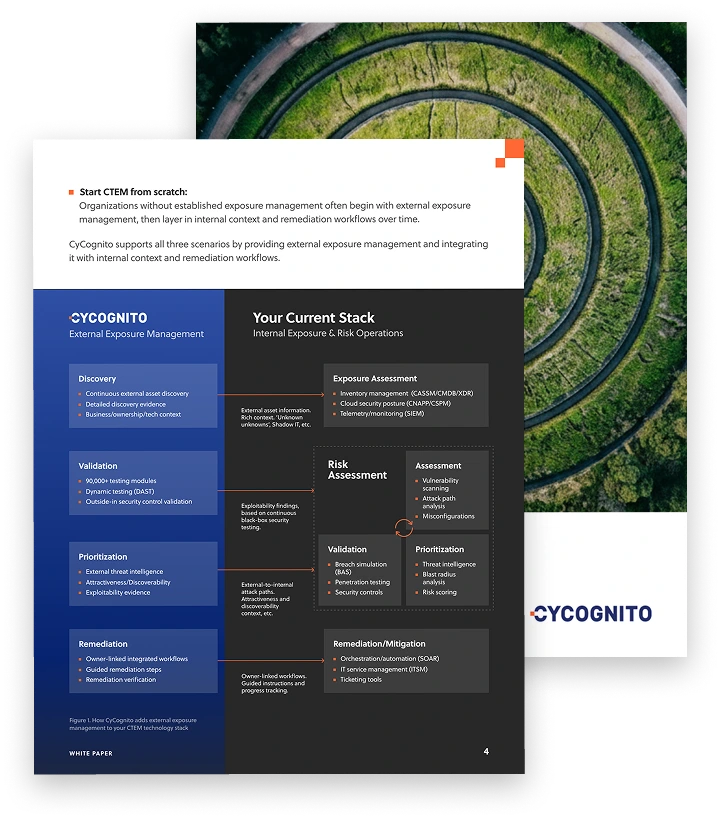
Operationalizing CTEM Through External Exposure Management

CTEM breaks when it turns into vulnerability chasing. Too many issues, weak proof, and constant escalation…

This whitepaper offers a practical starting point for operationalizing CTEM, covering what to measure, where to start, and what “good” looks like across the core steps.
Get the White Paper

CrowdStrike Falcon Bundles Pricing

Let’s review pricing and features included in CrowdStrike’s product bundles.

Note: CrowdStrike pricing is subject to change, and is accurate as of the time of this writing. For up-to-date information and more details, it is recommended to refer to the official pricing page.

Falcon Free Trial

Bundle pricing: CrowdStrike offers a 15-day free trial of its Falcon platform, giving organizations temporary access to core endpoint protection features without requiring a credit card. 

Features included: The trial includes next-generation antivirus, device control, and mobile device protection capabilities.

Falcon Go

Bundle pricing: Falcon Go is priced at $29.99 per device annually, with a 30-day money-back guarantee.

Features included:

  • Next-gen antivirus (Falcon Prevent), USB device control (Falcon Device Control), and mobile device protection (Falcon for Mobile).
  • Falcon Go also comes with Express Support, offering rapid assistance for installation and management issues. 

Falcon Pro

Pricing: Falcon Pro is is priced at $49.99 per device annually

Features included:

  • Next-gen antivirus, device control, mobile device protection, and adds centralized firewall management for improved security enforcement across the organization.
  • AI-driven antivirus through Falcon Prevent, delivering malware prevention supported by CrowdStrike’s intelligence. Device control and Falcon for Mobile extend protection to USB devices and mobile endpoints. 
  • Falcon Firewall Management provides the ability to create, deploy, and enforce host-based firewall policies from a single interface.
  • Express Support to assist with deployment and troubleshooting.

Falcon Enterprise

Pricing: Falcon Enterprise is priced at $92.49 per device annually. 

Features included

  • All the features in Pro.
  • Falcon Insight XDR, which provides real-time detection and response across endpoints and other data sources.
  • Falcon OverWatch, which provides 24/7 threat hunting led by security experts.

Crowdstrike Falcon Pricing Comparison Table

BundleAnnual Price (Per Device)Key FeaturesTarget Audience
Falcon Free TrialFree (15 days)Next-gen antivirus, device control, mobile protectionEvaluation purposes
Falcon Go$29.99Falcon Prevent (NGAV), USB device control, Falcon for Mobile, Express SupportSmall businesses
Falcon Pro$49.99All Go features plus Falcon Firewall Management, integrated intelligenceMid-sized businesses
Falcon Enterprise$92.49All Pro features plus Falcon Insight XDR (real-time detection and response), Falcon OverWatch (24/7 managed threat hunting)Enterprises needing advanced detection
Falcon PremiumCustom pricingAll Enterprise features plus Threat Intelligence module and IT Hygiene for improved asset visibility and proactive threat detectionEnterprises focused on visibility and hygiene
Falcon CompleteCustom pricingFull managed service with all core modules; includes deployment, monitoring, and response managed by CrowdStrike expertsOrganizations without in-house SOC

CrowdStrike vs. CyCognito 

While both CrowdStrike Falcon Surface and CyCognito offer external attack surface management (EASM) capabilities, there are significant differences in approach, depth of automation, and risk validation. 

CyCognito positions itself as a more comprehensive and autonomous platform, offering zero-input discovery and automated, unauthenticated security testing at scale. It offers a fully autonomous, zero-input platform with deep discovery, automated risk validation, and remediation planning, making it suitable for organizations seeking full visibility and precision without heavy manual input.

CrowdStrike Falcon Surface, based on its acquisition of Reposify, relies more heavily on passive discovery methods and customer-provided input, which can limit its ability to uncover unknown exposures. It provides foundational EASM capabilities and integrates with the broader Falcon ecosystem, but its reliance on manual configuration and passive discovery may limit visibility and effectiveness in dynamic environments.

Key comparison points:

FeatureCyCognitoCrowdStrike Falcon Surface
Discovery ApproachZero-input, autonomous discovery using OSINT and graph-based mappingRequires seed data and manual tagging to identify assets
Testing Methodology100,000+ automated, unauthenticated black-box tests across OWASP Top 10, weak credentials, CVEsPrimarily passive scanning; lacks comprehensive agentless active testing
CoverageCovers entire attack surface, including shadow IT, subsidiaries, SaaS, IaaS, and cloud environmentsLimited to known assets and domain-based discovery
Risk PrioritizationNext-gen algorithm prioritizes <0.01% of issues as critical based on threat intelligence and exploitabilityLimited by lack of active testing and contextual data
Remediation ToolsIncludes automatic remediation validation, executive reporting, and integrations with tools like ServiceNow and SplunkLacks remediation validation and relies on manual reporting and export
Red Team SupportAccelerates red teaming with asset attribution and automated tests to reduce manual effortsRequires red teams to spend time on basic asset discovery and testing
Business Context MappingUses NLP and ML to automatically map organizations, subsidiaries, and asset ownershipDepends on customer input to identify business structure and related assets

Explore all guides

AI Security

AI Security

AI security covers prompt injection, model poisoning, insecure agents, MCP servers, shadow AI, and more. Learn the key risks and best practices for securing AI systems and infrastructure.

Learn More about AI Security
API Security

API Security

APIs, the unseen connections powering modern apps, can be vulnerable entry points for attackers. Weak API security exposes sensitive data and critical functions, potentially leading to breaches and disruptions.

Learn More about API Security
Application Security

Application Security

Application security (AppSec) involves safeguarding applications against threats throughout their lifecycle. This encompasses the entire process from design to deployment, ensuring that applications remain resilient against cyber threats.

Learn More about Application Security
Attack Surface Management

Attack Surface Management

Attack surface management is the continuous process of identifying and reducing an organization’s exposed assets and vulnerabilities before attackers can exploit them.

Learn More about Attack Surface Management
Cloud Security

Cloud Security

Cloud security refers to the discipline of protecting cloud-based infrastructure, applications, and data from internal and external threats.

Learn More about Cloud Security
Cyber Attack

Cyber Attack

A cyber attack is an attempt by hackers to damage or disrupt a computer network or system.

Learn More about Cyber Attack
DRPS

DRPS

A digital risk protection service (DRPS) offers visibility and defense against cybersecurity threats to an organization’s digital attack surfaces.

Learn More about DRPS
Exposure Management

Exposure Management

Exposure management is a set of processes which allow organizations to assess the visibility, accessibility, and risk factors of their digital assets.

Learn More about Exposure Management
Penetration Testing

Penetration Testing

Penetration testing, often called pentesting, is a simulated cyberattack on a computer system, network, or application to identify vulnerabilities.

Learn More about Penetration Testing
Red Teaming

Red Teaming

Red teaming is a security assessment method where a team simulates a real-world cyberattack on an organization to identify vulnerabilities and weaknesses in their defenses. This helps organizations improve their security posture by revealing potential attack vectors and response inefficiencies.

Learn More about Red Teaming
Threat Hunting

Threat Hunting

Threat hunting is a proactive cybersecurity practice where security teams search for and isolate advanced threats that have bypassed traditional security measures. It involves actively searching for malicious activity within a network, rather than just responding to alerts from security systems.

Learn More about Threat Hunting
Threat Intelligence

Threat Intelligence

Threat intelligence is the process of gathering, analyzing, and interpreting information about potential or actual cyber threats to an organization. It’s a proactive approach that helps organizations understand the threat landscape, identify risks, and implement effective security measures.

Learn More about Threat Intelligence
Vulnerability Assessment

Vulnerability Assessment

Vulnerability assessment is the process of identifying, quantifying, and prioritizing vulnerabilities in a system.

Learn More about Vulnerability Assessment
Vulnerability Management

Vulnerability Management

Vulnerability management is a comprehensive approach to identifying and reporting on security vulnerabilities in systems and the software they run.

Learn More about Vulnerability Management

By clicking submit, I acknowledge receipt of the CyCognito Privacy Policy.

Thank you! Here is the report you requested.

Click below to access your copy of the "Operationalizing CTEM With External Exposure Management" white paper.

Read the White Paper
Cycognito White Paper

Operationalizing CTEM With External Exposure Management

Operationalizing CTEM With External Exposure Management

CTEM breaks when it turns into vulnerability chasing. This whitepaper gives a practical starting point to operationalize CTEM through exposure management, with requirements, KPIs, and where to start.