
What Is Cloud Computing Compliance?
Cloud compliance is the process of ensuring cloud systems, applications, and data meet legal, regulatory, and industry standards for security, privacy, and operations. It involves implementing controls, aligning with frameworks such as HIPAA, GDPR, and PCI DSS, and continuously monitoring environments to reduce risk and maintain customer trust. Compliance is a shared responsibility between the cloud service provider and the customer.
Key aspects of cloud compliance include:
- Shared responsibility: Compliance requires contributions from both the cloud provider and the customer. The provider secures the underlying infrastructure, and the customer is responsible for protecting the data, configurations, and applications they run on that infrastructure.
- Frameworks and standards: Using established frameworks such as the Cloud Security Alliance Cloud Controls Matrix, ISO 27001, or NIST provides a structured way to meet regulatory and security requirements.
- Key components: Compliance depends on implementing security controls, managing access to data, performing regular audits, and continuously monitoring cloud environments for vulnerabilities.
Tools: Automation tools can help manage, monitor, and audit cloud security and compliance, which is especially critical for organizations in heavily regulated sectors.
Cloud Compliance vs. Cloud Governance
Cloud compliance focuses on adhering to external rules set by regulators or industry frameworks, such as GDPR, HIPAA, or PCI DSS, ensuring that specific requirements are met and documented. Compliance activities are often periodic or triggered by audits, and failure to comply typically results in legal or financial penalties.
Cloud governance is the internal system of policies, roles, responsibilities, and processes that steer organizational use of the cloud toward business objectives while managing risk. Governance covers not just compliance, but also cost optimization, performance management, resource usage, and internal security protocols. Governance supports compliance by embedding controls into workflows, creating accountability, and facilitating audit readiness.
Key Cloud Compliance Frameworks and How They Impact Cloud Environments
1. General Data Protection Regulation (GDPR)
The General Data Protection Regulation (GDPR) is a European Union regulation that establishes strict rules for processing personal data of individuals within the EU. GDPR applies to any organization globally that handles data belonging to EU residents, regardless of where the company is based. Key requirements include data subject consent, the right to erasure (right to be forgotten), breach notification, and demonstrating accountability through detailed records and processing activities.
How it affects cloud environments:
For cloud computing, GDPR poses specific challenges related to data residency, cross-border transfers, and the use of third-party cloud providers. Organizations must ensure their cloud contracts provide for data protection, implement appropriate technical and organizational measures, and clarify the roles of data controllers and processors. Cloud service providers are increasingly offering compliance features such as regional data centers and encryption controls to help customers meet GDPR obligations.
2. Health Insurance Portability and Accountability Act (HIPAA)
HIPAA is a U.S. regulation designed to protect the privacy and security of individuals’ medical information, or protected health information (PHI). It contains requirements for physical, administrative, and technical safeguards that must be implemented by covered entities (like healthcare providers) and their business associates, which can include cloud service providers storing or processing PHI.
How it affects cloud environments:
Cloud compliance with HIPAA involves setting up strict access controls, encryption in transit and at rest, activity logs, and contractual protections through Business Associate Agreements (BAAs). Organizations using the cloud for healthcare applications must confirm that their providers are willing to sign BAAs and can demonstrate compliance through independent audits or certifications. Not all cloud services are HIPAA-eligible by default, so risk assessments and vendor due diligence are essential before migrating sensitive workloads.
3. Payment Card Industry Data Security Standard (PCI DSS)
PCI DSS is an industry-driven framework designed to protect cardholder data during processing, storage, or transmission by merchants and service providers. The standard is mandatory for any organization handling credit card transactions, and non-compliance can result in significant penalties or loss of payment processing capabilities.
How it affects cloud environments:
When cloud services are involved, PCI DSS compliance requires careful mapping of shared responsibilities, with detailed documentation of which controls are managed by the customer versus the provider. Providers offering PCI DSS-compliant environments help ease this burden but do not absolve customers from their duties. Key requirements for cloud PCI compliance include using encrypted connections, segmenting cardholder data environments, conducting regular security testing, and maintaining comprehensive logs accessible for audits.
4. Federal Risk and Authorization Management Program (FedRAMP)
FedRAMP is a U.S. government program that standardizes the security assessment, authorization, and continuous monitoring of cloud services used by federal agencies. To achieve FedRAMP compliance, cloud service providers must implement a set of controls based on NIST SP 800-53 and pass independent audits before authorization to operate is granted.
How it affects cloud environments:
Cloud customers using FedRAMP-authorized services gain assurance that providers have met stringent security and compliance requirements. However, agencies and organizations are responsible for ensuring their own applications and data usage within the authorized platform remain compliant. Continuous monitoring, incident reporting, and periodic assessments are mandatory to retain FedRAMP status, making this framework highly relevant for government workloads.
5. SOC 2 and ISO/IEC 27001
SOC 2 is an auditing standard developed by the American Institute of Certified Public Accountants (AICPA) that examines controls related to security, availability, processing integrity, confidentiality, and privacy in service organizations, including cloud providers. A SOC 2 report is often requested by enterprise customers to ensure that cloud vendors maintain effective internal controls around data protection.
How it affects cloud environments:
ISO/IEC 27001 is an international standard for information security management systems (ISMS), providing a framework for risk management, policy development, control implementation, and internal audits. Cloud providers certified against ISO/IEC 27001 signal that they follow global best practices for securing client data. Both SOC 2 and ISO 27001 are not regulatory mandates, but they are widely accepted standards that facilitate trust and smooth procurement.
6. Digital Operational Resilience Act (DORA) and NIS2
DORA and NIS2 are two pieces of EU legislation targeting financial and digital operational resilience. DORA applies specifically to financial institutions, mandating ICT risk management, incident response, and centralized reporting of major IT-related incidents—including those in cloud environments. NIS2 expands the scope of the existing Network and Information Security directive, introducing stricter cybersecurity and incident notification requirements for essential and important entities across multiple sectors.
How it affects cloud environments:
For cloud adoption, these regulations increase the compliance burden, especially when using third-party and cross-border cloud services. Organizations must ensure that vendors support necessary controls, real-time reporting scenarios, and incident management. The shift toward operational resilience means compliance is no longer a periodic exercise, but an ongoing, measurable capability embedded in cloud service delivery.
Tips from the Expert

Rob Gurzeev, CEO and Co-Founder of CyCognito, has led the development of offensive security solutions for both the private sector and intelligence agencies.
In my experience, here are tips that can help you better manage and scale cloud compliance efforts:
- Integrate compliance checkpoints into pull request workflows: Use automated checks that trigger during pull requests to evaluate infrastructure changes against compliance policies. This ensures violations are caught before deployment and ties compliance directly into developer workflows.
- Continuously inventory and assess exposed cloud services: Automate discovery of public endpoints, misconfigured storage, exposed APIs, and shadow resources across cloud accounts. Evaluate each against compliance requirements, especially where regulated data or authentication flows are involved. This prevents unmanaged or unknown cloud assets from creating non-compliant exposure.
- Build a compliance threat model for each framework: Instead of treating frameworks like checklists, model potential threat vectors tied to specific regulatory obligations (e.g., how a misconfigured S3 bucket could violate GDPR). This contextual modeling helps prioritize technical controls that matter most.
- Run synthetic audits against historical logs: Periodically simulate audit scenarios using historical event and config logs to assess how quickly and completely your teams can generate evidence. This proactive drill helps tune log retention, tagging, and reporting pipelines before real audits happen.
- Use immutable infrastructure for regulated workloads: Design regulated environments to be rebuilt from code instead of patched. Immutable deployments reduce audit surface and simplify configuration verification, ensuring every provisioned instance adheres to documented controls.
- Create role-based cloud compliance playbooks: Develop actionable, role-specific guides for engineers, developers, and operations teams outlining how to meet compliance requirements in their domain (e.g., tagging standards, backup policies, key rotation). This eliminates ambiguity and decentralizes responsibility.
Cloud Compliance Challenges and Risks
Here are some common challenges organizations face when adapting cloud environments to the requirements of standards like GDPR and PCI DSS.
Complexity of Multi-Cloud Environments
Multi-cloud environments, where organizations use services from multiple cloud providers, increase the complexity of compliance management. Each provider offers different tools, features, and shared responsibility models, making it difficult to apply consistent controls and policies across the ecosystem. Siloed deployment models can lead to inconsistent access management, configuration drift, and gaps in visibility, all of which are problematic when trying to demonstrate compliance to auditors or regulators.
In addition, multi-cloud setups complicate data residency, sovereignty, and encryption approaches, particularly when governed by overlapping regulatory regimes. Keeping pace with evolving compliance requirements across platforms demands significant operational agility and expertise. Organizations must invest in centralized visibility tools, cross-platform compliance automation, and well-defined procedures to reduce the risk of violations or audit failures.
Continuous Compliance in Agile DevOps Pipelines
Agile development and DevOps practices have accelerated software release cycles, but this creates a major challenge for continuous compliance. Frequent and automated changes in production environments mean traditional, periodic compliance checks become ineffective, increasing the risk of configuration drift, policy violations, or the accidental exposure of sensitive data as new features are deployed.
To maintain compliance, organizations must embed controls directly into DevOps workflows. This can involve automating compliance checks in CI/CD pipelines, enforcing security policies through Infrastructure-as-Code (IaC), and adopting real-time monitoring tools. By integrating compliance into the deployment process, organizations ensure that rapid innovation does not come at the cost of regulatory violations or security weaknesses.
Data Sovereignty and Jurisdiction Issues
Data sovereignty is the concept that digital data is subject to the laws of the country in which it is stored. In a cloud context, this creates risk because data may be distributed across multiple regions and jurisdictions, each with its own privacy, security, and disclosure requirements. Cloud customers are often unaware of the exact location of their data, complicating efforts to ensure full legal compliance.
Jurisdictional challenges may force organizations to restrict workloads to specific regions, use specialized encryption, or negotiate unique contractual clauses with providers. Non-compliance can lead to fines, forced data repatriation, or court-ordered disclosures. To mitigate these risks, firms must thoroughly understand their provider’s data residency policies, choose service regions carefully, and leverage technologies like geo-fencing and encrypted storage.
Third-Party and Supply Chain Dependencies
Cloud supply chains are often complex, with cloud vendors themselves depending on subcontractors and third-party service providers. Each link introduces additional risk and potential compliance gaps, particularly if vendors do not meet the same regulatory standards or if contractual terms are vague about required controls and audit rights.
To address these risks, organizations must conduct systematic risk assessments of all third-party relationships, mandate compliance clauses in contracts, and require transparent reporting from partners. Vendor management programs should include regular compliance attestations and audits, as well as incident notification requirements.
Audit Fatigue and Cost Management
Maintaining ongoing compliance in the cloud often requires frequent internal and external audits, with each framework or client mandating its own procedures and evidence collection. This leads to audit fatigue for compliance teams, who must balance reporting duties with operational responsibilities. Constant audit pressure also increases the risk of errors, missed findings, or burnout among key personnel.
Financial costs also mount, as organizations must invest in compliance tooling, consulting, training, and specialist staff. Maintaining multiple certifications or meeting overlapping requirements for different clients or markets multiplies the resource burden. Cost management strategies, such as the adoption of compliance automation tools, risk-based control prioritization, and integrated compliance reporting, can reduce this overhead while maintaining high assurance levels.

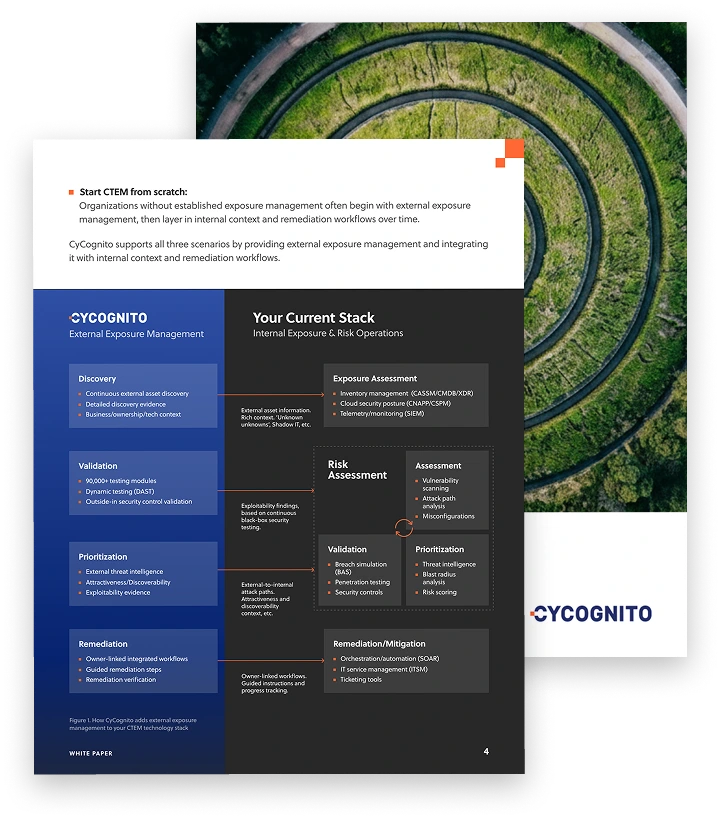
Operationalizing CTEM Through External Exposure Management
CTEM breaks when it turns into vulnerability chasing. Too many issues, weak proof, and constant escalation…
This whitepaper offers a practical starting point for operationalizing CTEM, covering what to measure, where to start, and what “good” looks like across the core steps.
Core Elements of a Cloud Compliance Program
1. Risk Assessment and Data Classification
A risk assessment is foundational for any cloud compliance program. It identifies threats to information assets, evaluates the impact of potential events, and prioritizes mitigation measures to address the most pressing risks. In a cloud environment, this assessment covers data storage, processing activities, access patterns, and third-party providers. It should be revisited regularly, especially after major architectural or regulatory changes.
Data classification is equally critical, assigning value and sensitivity labels to information assets. This ensures that high-risk or regulated data is subject to enhanced controls, such as encryption, restricted access, and tighter audit trails. Effective classification helps organizations map regulatory requirements to technical safeguards and guides resource allocation for compliance initiatives across diverse cloud workloads.
2. Policy Definition and Governance Controls
Defining clear, actionable policies is a necessary step in translating regulatory requirements into enforceable internal rules. Cloud compliance policies should address access controls, data handling, incident response, encryption, and acceptable service configurations. In high-velocity IT environments, policy frameworks must be flexible enough to accommodate rapid change without introducing ambiguity.
Governance controls operationalize these policies through role assignments, approval workflows, enforcement mechanisms, and documentation trails. Automated policy engines, cloud governance platforms, and regular review cycles ensure that controls are effective, up-to-date, and auditable. By embedding governance into development and operational processes, organizations increase compliance by design and minimize the window for accidental policy violations.
3. Automation and Continuous Monitoring
Automation is critical for scaling compliance efforts across dynamic, cloud-native infrastructures. Automated tools can scan for misconfigurations, enforce policies, and flag anomalies in real-time, substantially reducing manual workload and the chance of human error. Automated compliance reporting tools also gather evidence for audits, speeding up preparation and reducing compliance costs.
Continuous monitoring tools provide ongoing visibility into system states and control effectiveness. By integrating with cloud APIs and event streams, these tools detect compliance drift and policy violations as they occur, not after the fact. Automated remediation workflows can restore compliant states without human intervention, ensuring that organizations meet “continuous compliance” mandates common in modern frameworks and customer contracts.
4. Incident Response and Reporting Mechanisms
A robust incident response process is a must for cloud compliance, as many regulations mandate rapid breach detection and reporting. Organizations must define clear escalation paths, notification procedures, and remediation steps for potential incidents involving cloud-based assets. This includes integrating with cloud provider tools for log access, forensics, and evidence preservation.
Reporting mechanisms must meet the legal and contractual obligations relevant to the data and jurisdiction. This involves predefining templates for mandatory disclosure, setting up automated alerts for suspicious activity, and conducting periodic incident response testing. Regular drills and tabletop exercises prepare teams for real-world scenarios and reveal gaps in processes, enabling faster recovery and minimizing regulatory penalties.
5. Documentation and Evidence Management
Comprehensive documentation is the backbone of any compliance program, especially in the cloud where responsibilities are often shared. Organizations must maintain up-to-date records of policies, risk assessments, configurations, audit logs, and incident response plans. This not only supports internal governance but also enables rapid evidence gathering during audits.
Effective evidence management tools help automate collection, indexing, and secure storage of artifacts needed to demonstrate regulatory adherence. Modern cloud platforms often provide APIs for evidence extraction, versioning, and secure retention. Well-organized documentation reduces audit fatigue and streamlines compliance reporting, contributing to a more resilient and audit-ready organization.
Emerging Technologies and Their Impact on Cloud Compliance
Here are some of the key technologies helping operationalize cloud compliance in organizations.
Compliance Automation and AI-Powered Auditing
AI-powered compliance automation is transforming how organizations approach cloud regulation challenges. Machine learning models can identify patterns in large volumes of log and configuration data, flagging policy violations and risky behaviors that manual reviews would miss. Automated tools can track regulatory changes, update control libraries, and suggest remediations to enable continuous compliance.
AI-driven auditing streamlines the evidence-gathering process by automatically indexing, correlating, and verifying artifacts required for regulatory exams. This reduces preparation time, decreases the likelihood of omissions, and helps organizations respond faster to auditor queries. While promising, these tools must themselves be monitored for bias, gaps, or over-reliance on automation, especially as regulations evolve.
Compliance-as-Code and Infrastructure-as-Code Integration
Compliance-as-Code (CaC) embeds regulatory requirements directly into Infrastructure-as-Code (IaC) templates and cloud orchestration scripts. This ensures that every environment provisioned in the cloud is compliant by default, reducing the risk of human error and configuration drift. CaC platforms validate code against policies during development, preventing non-compliant resources from being deployed.
Integrating compliance checks into the CI/CD pipeline enables organizations to enforce controls programmatically, aligning compliance with agile and DevOps practices. This automated approach streamlines enforcement and facilitates rapid recovery when violations are detected. However, robust testing frameworks are necessary to catch edge cases, and development teams need training to interpret compliance feedback generated during automated builds.
Zero Trust Architectures in Compliance Frameworks
Zero Trust Architecture (ZTA) is an approach rooted in the principle of “never trust, always verify.” ZTA mandates strict identity verification, least-privilege access, and continuous monitoring for every user, device, and workload, whether inside or outside the corporate perimeter. Applying ZTA in the cloud supports compliance objectives by minimizing the attack surface and reducing the risk of unauthorized access to sensitive data.
Cloud providers are increasingly offering services that support Zero Trust principles, such as identity-aware proxies, granular policy engines, and software-defined perimeters. Adopting ZTA aligns with many regulatory frameworks’ requirements for segmentation, access logging, and real-time threat detection. However, it demands significant redesign of legacy architectures and close coordination across security, compliance, and IT operations teams.
Privacy Enhancing Technologies (PETs)
Privacy Enhancing Technologies (PETs) encompass a variety of technical approaches to protecting sensitive data while enabling business operations in data-rich environments. Examples include homomorphic encryption, differential privacy, and secure multi-party computation. PETs allow organizations to analyze and share information without exposing the underlying personal data—facilitating compliance with stringent privacy regulations like GDPR.
Cloud providers are beginning to offer managed PET services to help customers run privacy-preserving workloads at scale. Integration of PETs can limit the exposure of regulated data, reduce breach risk, and enable more flexible collaboration with partners. However, PET adoption may entail performance tradeoffs, technical complexity, and the need for specialized implementation expertise.
Cloud Compliance in the AI and LLM Ecosystem
As organizations deploy AI and large language models (LLMs) in the cloud, new compliance challenges arise around model governance, data provenance, and explainability. Regulatory bodies are beginning to mandate transparency in model decision-making, protections for training data, and robust audit trails for AI-driven processes. Complying with these requirements means documenting model training inputs, bias mitigation steps, and the logic behind automated decisions.
Cloud compliance strategies for AI need to include controls for data lineage, secure model management, and monitoring for drift or unexpected behavior. Organizations should implement policies to govern interactions with public or third-party AI services, ensuring data that is subject to regulatory control is not inadvertently exposed or processed outside acceptable boundaries. The intersection of cloud, AI, and compliance will only become more complex as regulations mature and enforcement intensifies.
Cloud Compliance Best Practices
Here are some of the ways that organizations can ensure compliance in cloud settings:
- Inventory and classify assets, data and workloads: Maintain a dynamic inventory of every asset, data repository, and cloud workload. Automated discovery tools can map resources across cloud environments, flagging shadow IT and identifying orphaned resources. Classification schemes categorize data by risk, sensitivity, and regulatory impact, ensuring that controls are tailored to the business value and compliance exposure of each asset.
- Align security and compliance teams early: Security and compliance are closely entwined but can become siloed in traditional organizations, leading to conflicting priorities and last-minute risk remediation. Involving both teams early in cloud projects ensures that compliance requirements are embedded into solution architectures, coding standards, and operational playbooks from the outset.
- Use multi-region data mapping and sovereignty planning: Cloud compliance mandates often hinge on where data resides, moves, and processes. Multi-region data mapping provides visibility into how regulated information flows between geographies and what controls apply at each point. Sovereignty planning enables organizations to preemptively select cloud regions, configure storage policies, and enforce geo-fencing as dictated by regulatory and contractual demands.
- Establish a shared responsibility model: This model delineates which controls are managed by the customer and which are handled by the cloud service provider. Clear documentation and understanding of these boundaries are essential. Customers typically remain responsible for data encryption, identity and access management, and application-layer controls. Formalizing this model in contracts, playbooks, and diagrams helps avoid confusion.
- Conduct regular independent compliance audits: Third-party assessors can provide an unbiased evaluation of controls, highlight overlooked risks, and verify that policies are enforced in practice. These audits are often required for regulatory certifications and can help maintain business credibility with clients and partners.
How CyCognito Enables Cloud Compliance
CyCognito is an attack surface management platform that gives organizations visibility into their externally accessible cloud assets and helps identify compliance gaps tied to those exposures. Its outside-in approach complements internal cloud security and governance tools by focusing on what is reachable from the internet.
CyCognito contributes to cloud compliance in several ways:
- Discovery of external cloud assets: The platform continuously identifies internet-facing services, storage, APIs, and workloads across cloud providers. This helps uncover shadow resources and unmanaged assets that often sit outside normal compliance controls.
- Mapping exposures to regulatory impact: CyCognito correlates external assets with business context and sensitivity levels. This makes it easier to determine whether an exposed service could affect requirements in frameworks such as GDPR, HIPAA, PCI DSS, or ISO 27001.
- Prioritized remediation for compliance risk: Findings are ranked by severity and potential regulatory impact. This supports risk-based compliance by guiding teams toward issues that are most likely to create violations or trigger reportable incidents.
- Continuous monitoring for configuration drift: As cloud environments change, CyCognito detects new exposures or altered configurations that may break compliance. This helps maintain continuous assurance rather than relying on periodic manual reviews.
- Audit-ready evidence: The platform provides clear records of identified exposures, remediation steps, and historical trends. These artifacts support audit preparation, control validation, and compliance reporting.
CyCognito strengthens cloud compliance programs by revealing the external cloud footprint that traditional internal tools often miss. This reduces the risk that misconfigurations or unknown assets create non-compliant exposure to regulated data.