


Frequently Asked Questions

Compliance & Audit Challenges

What are the biggest compliance challenges organizations face with their external attack surface?

Organizations often struggle with maintaining a complete inventory of externally exposed assets, interpreting complex compliance requirements, and preparing for audits. Gaps in asset inventories, lack of ownership information, and insufficient business context can create uncertainty and increase risk during compliance events. These challenges can lead to stressful, disruptive, and costly audit processes. (Source: Cycognito Blog)

How does CyCognito help organizations prepare for compliance audits?

CyCognito provides governance, risk, and compliance (GRC) teams with industry-leading visibility into externally exposed assets, continuous active testing, dynamic mapping of compliance violations, and broad framework support. This enables teams to quickly assess exposure, prioritize remediation, and export compliance data for audits. (Source: Cycognito Blog)

What compliance frameworks does CyCognito support?

CyCognito supports a wide range of compliance frameworks, including PCI-DSS v4, NIST 800-53 R5, NIST 800-171 R2, CIS v8, ISO27001:2022, and ISO27002:2022. The platform dynamically maps violations to these frameworks, helping organizations streamline compliance efforts. (Source: Cycognito Blog)

How does CyCognito simplify compliance audits?

CyCognito reduces unknowns by providing a comprehensive asset inventory, continuous risk assessments, and a compliance dashboard that summarizes violations globally and by division. All compliance data is available for export and via API, making it easy to operationalize and present evidence during audits. (Source: Cycognito Blog)

Can CyCognito help with evidence collection for compliance?

Yes, CyCognito automates evidence collection by mapping findings to relevant controls and providing downloadable reports and API access. This streamlines the process of gathering documentation required for compliance audits. (Source: Trust Center)

What certifications does CyCognito hold for security and compliance?

CyCognito is SOC 2 Type II and ISO 27001 certified, demonstrating robust security controls and adherence to stringent information security management practices. These certifications reinforce CyCognito's commitment to protecting customer information. (Source: Trust Center)

How does CyCognito provide early warning of compliance violations?

CyCognito integrates with asset inventory and security testing workflows to deliver actionable insights and early warnings of compliance violations, enabling teams to remediate issues before audits. (Source: Trust Center)

Where can I access compliance data in CyCognito?

Compliance data is available to all CyCognito customers via the Risks page or Compliance dashboard, accessible from the home page menu. Data can be viewed, downloaded, or accessed via API. (Source: Cycognito Blog)

How does CyCognito support ongoing compliance monitoring?

CyCognito provides continuous active testing and dynamic compliance mapping, ensuring that organizations can monitor their compliance posture in real time and respond proactively to new risks. (Source: Cycognito Blog)

What are the risks of failing a compliance audit?

Failing a compliance audit can have legal and financial implications and may waste valuable IT security team time. CyCognito helps reduce these risks by providing comprehensive compliance data and proactive risk management. (Source: Cycognito Blog)

Features & Capabilities

What is CyCognito's approach to external attack surface management?

CyCognito uses autonomous systems to discover, test, and prioritize external risks, simulating real attacks and surfacing only exploitable and urgent issues. The platform provides continuous discovery and mapping of external-facing assets, including networks, web applications, cloud services, and APIs. (Source: Company Page)

What are the core features of the CyCognito platform?

Core features include seedless discovery of unknown assets, risk-based prioritization, automation for scale, verified closure of security issues, and comprehensive security management with integrations to leading IT and security platforms. (Source: Why CyCognito)

Does CyCognito support integrations with other security tools?

Yes, CyCognito integrates with platforms such as Armis, Palo Alto Networks, Tenable, Wiz, Axonius, CrowdStrike, Cobalt, JupiterOne, ServiceNow, Splunk, Zendesk, and Jira. These integrations enable automated workflows and centralized information sharing. (Source: Integrations Page)

What types of automations does CyCognito offer?

CyCognito offers automations for vulnerability management, third-party incident management, asset management, SIEM/SOAR/XDR, cloud security posture management, cloud native application protection, and third-party ticketing solutions. (Source: Integrations Page)

What technical documentation is available for CyCognito?

CyCognito provides datasheets and resources covering platform overview, automated security testing, discovery and contextualization, prioritization and remediation, exploit intelligence, vulnerability management, active security testing, remediation planning, cloud connector, customer success, and NIST 800-53 alignment. (Source: Knowledge Hub)

How does CyCognito prioritize risks?

CyCognito combines exploitability, business context, and attack-path insights to focus on the top 0.01% of risks, reducing noise and alert fatigue. This ensures that security teams can prioritize high-impact vulnerabilities. (Source: Why CyCognito)

Does CyCognito verify remediation of security issues?

Yes, CyCognito periodically retests issues to ensure genuine remediation, addressing unresolved risks even after ticket closure. (Source: Why CyCognito)

What is seedless discovery and how does CyCognito use it?

Seedless discovery is CyCognito's autonomous approach to identifying unknown or unmanaged assets, including shadow IT and forgotten services, without requiring manual input or asset lists. This uncovers up to 20× more exposures than traditional tools. (Source: Why CyCognito)

How does CyCognito automate vulnerability management?

CyCognito automates asset discovery, vulnerability analysis, and security testing, reducing manual effort and enabling organizations to scale their security operations efficiently. (Source: Why CyCognito)

Use Cases & Benefits

Who can benefit from using CyCognito?

CyCognito is designed for IT security teams, CISOs, security operations teams, enterprises with complex infrastructures, government agencies, Fortune 500 companies, and organizations in industries such as education, media, gaming, hospitality, and healthcare. (Source: Customer Stories)

What business impact can customers expect from CyCognito?

Customers can save up to $500,000 annually by reducing dependency on manual penetration testing and bug bounty programs. CyCognito also reduces critical findings from about 25% to 0.1%, improves operational efficiency, and provides comprehensive visibility into external assets. (Source: Why CyCognito)

What pain points does CyCognito address for security teams?

CyCognito addresses challenges such as unknown or unmanaged assets, excessive alert noise, manual processes, scaling security operations, prioritizing risks, blind spots in third-party environments, and verifying remediation of security issues. (Source: Homepage)

Are there real-world examples of CyCognito's impact?

Yes, case studies include Scientific Games uncovering hidden assets, Ströer reducing alert fatigue, Berlitz identifying 140 critical issues in a year, and a hospitality company detecting and shutting down rogue access. (Source: Customer Stories)

What industries are represented in CyCognito's case studies?

Industries include gaming, media, education, hospitality, and telecommunications, demonstrating CyCognito's versatility across sectors. (Source: Customer Stories)

How do customers rate CyCognito's ease of use?

Customers consistently praise CyCognito for its intuitive platform and ease of use. Testimonials highlight its comprehensive asset detection, continuous vulnerability analysis, and user-friendly interface. (Source: Why CyCognito)

How quickly can CyCognito be implemented?

CyCognito is built for rapid deployment with minimal setup. It does not require agents or sensors and begins continuous discovery and validation immediately, allowing organizations to gain visibility and prioritize risks almost instantly. (Source: UVM Solution)

What resources are available to help with CyCognito implementation?

Resources include a Knowledge Center, Support Portal, and a dedicated Customer Success Team to guide implementation and best practices. (Source: Customer Success Datasheet)

Competition & Comparison

How does CyCognito compare to Tenable ASM?

CyCognito offers continuous outside-in discovery and automated validation, providing 20× more visibility and focusing on the top 0.01% of risks. Tenable ASM relies on manual input and passive scanning, which can miss blind spots. (Source: Homepage)

What differentiates CyCognito from Qualys?

CyCognito focuses on external attack surface management with autonomous discovery of unknown assets, while Qualys primarily offers vulnerability management tools. CyCognito provides seedless discovery and automated risk prioritization, which Qualys lacks. (Source: Homepage)

How does CyCognito compare to Microsoft Defender EASM?

CyCognito autonomously discovers hidden assets and provides rapid vulnerability scanning, while Microsoft Defender EASM requires manual input and lacks comprehensive discovery. CyCognito offers seedless discovery, actionable insights, and continuous monitoring. (Source: Homepage)

What are CyCognito's advantages over CrowdStrike Falcon Surface?

CyCognito uses autonomous, black-box pentesting with 100,000+ testing modules and prioritizes risks based on exploitability and business context, enabling a >60% reduction in MTTR. CrowdStrike relies on passive scanning and lacks active testing results. (Source: Homepage)

How does CyCognito compare to Palo Alto Networks Cortex Xpanse?

CyCognito uses NLP, ML, and a graph data model for business mapping, providing 20× more visibility and automated pentesting with 100,000+ modules. Cortex Xpanse relies on manual mapping and misses critical assets. (Source: Homepage)

Why choose CyCognito over alternatives?

CyCognito offers seedless discovery, risk-based prioritization, automation for scale, verified closure of issues, and comprehensive integrations. It eliminates manual setup and provides deeper visibility and more accurate prioritization than competitors. (Source: Why CyCognito)

What customer proof points support CyCognito's effectiveness?

CyCognito is trusted by global enterprises such as Tesco, Colgate-Palmolive, Panasonic, Ströer, Hitachi, and more. Customer testimonials and case studies highlight measurable improvements in risk reduction and operational efficiency. (Source: Customer Stories)

What are the main differences between CyCognito and traditional vulnerability management tools?

Traditional tools often rely on manual input, passive scanning, and customer-supplied seed data. CyCognito provides autonomous, seedless discovery, automated risk prioritization, and continuous active testing, uncovering up to 20× more exposures and reducing alert fatigue. (Source: Why CyCognito)

Back to Blog

Navigating Compliance Challenges Across Your External Attack Surface

In today’s heavily regulated business environment, organizations must illustrate conformance to the compliance and regulatory frameworks that apply to their industry. Often, these events are disruptive, stressful, and costly.

During this time, milestones are identified, gaps are uncovered, issues are remediated, evidence is collected, and documentation is updated. Day-to-day activities are often put on the back burner, and stress levels rise as your teams scramble to gather information in preparation. 

Passing an audit is a challenge from start to finish. A recent study found that only 43.4% of organizations report achieving 100% compliance during interim compliance validation. Considering an audit can take weeks to accomplish, this means the blast zone from the project can easily turn into months as issues are investigated and resolved.

Understanding Requirements is Often the First Step

The time preceding an audit involves extensive meetings to interpret the latest standard and translate it into the language of your company. 

Organizational pressure to pass an audit often results in security teams feeling like they are under the magnifying glass, resulting in a “stop everything” approach to meet the needs of the auditor, executive leadership, and the business. IT security teams are forced to become compliance experts, and constant fire drills become the norm. 

For those who are not full-time professional auditors, interpreting the path to alignment with a control can be frustrating. Some are more clear than others - for example, PCI-DSS 11.3.1 requires at least annual penetration tests on internal and external systems. Others not so much – for example, PCI 6.4.1 requires separate access controls between test and development systems. Widely different.

Trying to forecast what the auditor wants to see can be difficult. If you are lucky, over time, you build a relationship with your auditor, which helps you understand their thought processes and how they define success.

Externally Exposed Assets Add Considerable Risk

Externally exposed assets, typically not easily tracked or tested, introduce substantial risk to an organization. Many IT teams are acutely aware of the challenges associated with managing externally exposed assets:

  • Gaps in inventories create uncertainty
  • Lack of asset ownership and discovery path information (globally, across parent company and subsidiaries) add delays
  • Lack of business context and asset importance underline knowledge gaps
  • Lack of visibility into complex risk reduces team credibility

Maintaining a complete external asset inventory is a top priority for any organization, but especially so for one that must align with compliance frameworks. Even one unknown asset with a critical or high-severity issue can introduce uncertainty at a time when every moment is precious.

Continuous Risk Assessments Make Compliance Manageable

Risk assessments are the best way to understand the level of exposure and, consequently, how to manage it. The risk assessment provides the action list needed to develop policies and procedures that act as the foundation of a compliant security program. It also provides a tactical list of issues to resolve immediately. However, unless the issue list is mapped to the compliance framework you are pursuing, it can also result in wasted effort.

Timing and frequency are always a challenge. Annual assessments are interesting but unhelpful, considering that CISA reports that 50% of vulnerabilities are exploited within 48 hours of disclosure. More frequency is better but is costly to maintain and operationalize.

Simplify Compliance Audits with CyCognito

Reducing unknowns, both asset-based and issue-based, is of paramount importance when working with an auditor. 

Using CyCognito, governance risk compliance (GRC) teams have confidence they have the full list of externally exposed assets. They are able to quickly assess the current state of exposure, the assets that need immediate attention, where the asset resides in your architecture, and instructions to remediate the issue. 

CyCognito provides:

  • Industry-leading visibility into organizational structure and externally exposed assets - Ensure your GRC teams have an accurate map to work from.
  • Continuous active testing for all exposed assets, including IP-based systems and web applications - Provide the risk visibility required to respond proactively. 
  • Dynamic mapping of compliance violations - Deliver your team a clear path to resolving issues promptly.
  • Broad framework support – PCI-DSS v4, NIST 800-53 R5, NIST 800-171 R2, CIS v8, ISO27001:2022 and ISO27002:2022. 

All data is available for local data export and through the CyCognito API, making operationalization both flexible and easy.

CyCognito provides multiple views into compliance posture. Figure 1 below illustrates the CyCognito compliance dashboard that summarizes the environment state. Links are dynamic, allowing you to click into specifics as needed. The ability to filter by sub-organization is also provided.
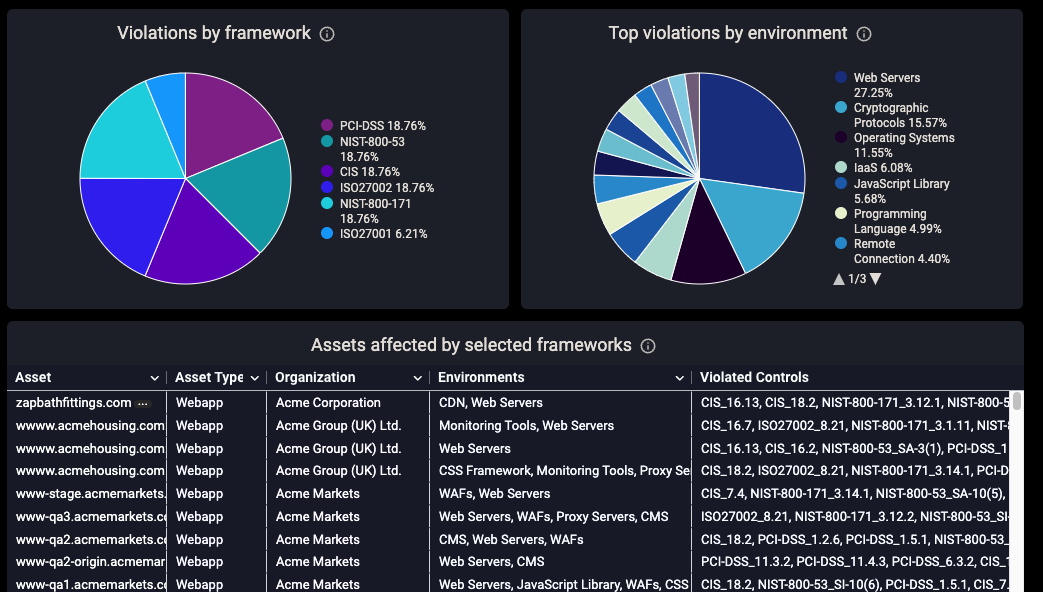
Figure 1: CyCognito compliance dashboard summarizing violations globally and per division

Framework violation details are provided for each issue. Figure 2 shows several of these columns, including a summary and violations per control, available for viewing, download, and via the CyCognito API.
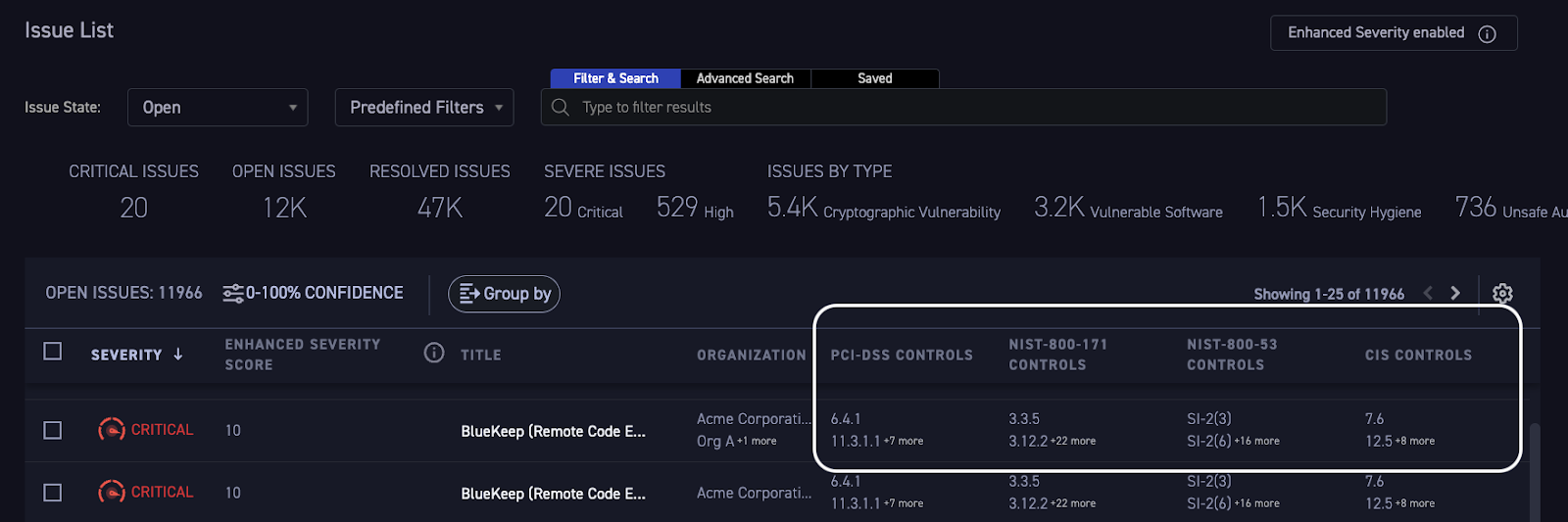
Figure 2: Violation details list for every asset

Find Out More

Failing an audit may have legal or financial implications as well as waste precious IT security team time. Compliance data is currently available to all CyCognito customers. Simply navigate to the Risks page or Compliance dashboard page, available through the home page menu.

CyCognito is a cloud-native software-as-a-service that was built to meet the external risk requirements of the largest and most complex organizations. If you are not a CyCognito customer and want to find out more about how we can help streamline your audit process, please contact us.

Request a free scan

See Exactly What Attackers See

Get a free scan of your attack surface and gain valuable insight into your organization's risk posture by allowing CyCognito to discover, contextualize, and test externally .

Request a Scan
Top Attack Paths