
How Is CrowdStrike Falcon Priced?
CrowdStrike Falcon is a cloud-native endpoint security and workload protection platform offered through subscription-based bundles. Pricing is typically on a per-endpoint, per-year basis, with costs varying by feature set, deployment scale, and add-ons.
The main bundles include:
- Falcon Go: Entry-level bundle designed for small businesses. Includes next-gen antivirus (Falcon Prevent), USB device control, mobile protection (Falcon for Mobile), and Express Support.
- Falcon Pro: Adds centralized firewall management to the Go bundle. Provides advanced malware protection, device control, and mobile security with integrated threat intelligence.
- Falcon Enterprise: Includes all Pro features plus Falcon Insight XDR for real-time detection and response, and Falcon OverWatch for 24/7 managed threat hunting.
- Falcon Premium: Adds threat intelligence and IT hygiene modules to the Enterprise tier, helping organizations with asset visibility and proactive threat detection.
- Falcon Complete: Fully managed service that includes all core modules with CrowdStrike experts handling deployment, monitoring, and response. Ideal for organizations without in-house security teams.
Key Factors That Influence CrowdStrike Falcon Costs
The following factors influence costs on the CrowdStrike Falcon platform:
- Licensing tiers and bundles: CrowdStrike Falcon offers several licensing tiers, each combining different feature sets and service levels. Bundles range from entry-level endpoint protection to suites incorporating threat intelligence, IT hygiene, and extended detection and response (XDR) capabilities.
- Endpoint volume: CrowdStrike Falcon’s pricing model is volume-based, varying depending on the number of protected endpoints. Discounts are available when organizations protect larger fleets of devices, with distinct price breakpoints generally set at thresholds like 500, 1,000, and 5,000 endpoints.
- Add-on modules: The base bundles of CrowdStrike Falcon can be supplemented with various add-on modules to address specific security or compliance requirements. Example extensions include modules for firewall management, IT hygiene, vulnerability assessment, and data protection. Each add-on increases the total cost, usually on a per-endpoint basis or over a fixed minimum license count.
- Cloud workload and identity coverage: CrowdStrike Falcon’s coverage now extends beyond traditional endpoints to cloud workloads and user identities. Protecting cloud servers, containers, and SaaS workloads typically incurs a different rate, typically higher than standard endpoints.
- Support, onboarding, and MDR service additions: CrowdStrike offers different support tiers, onboarding services, and managed detection and response (MDR) service options, all of which incur additional costs. While basic support may be included in standard licenses, premium or 24/7 support, accelerated onboarding, and MDR (such as Falcon Complete) are billed separately or as higher-end bundles.

Operationalizing CTEM Through External Exposure Management
CTEM breaks when it turns into vulnerability chasing. Too many issues, weak proof, and constant escalation…
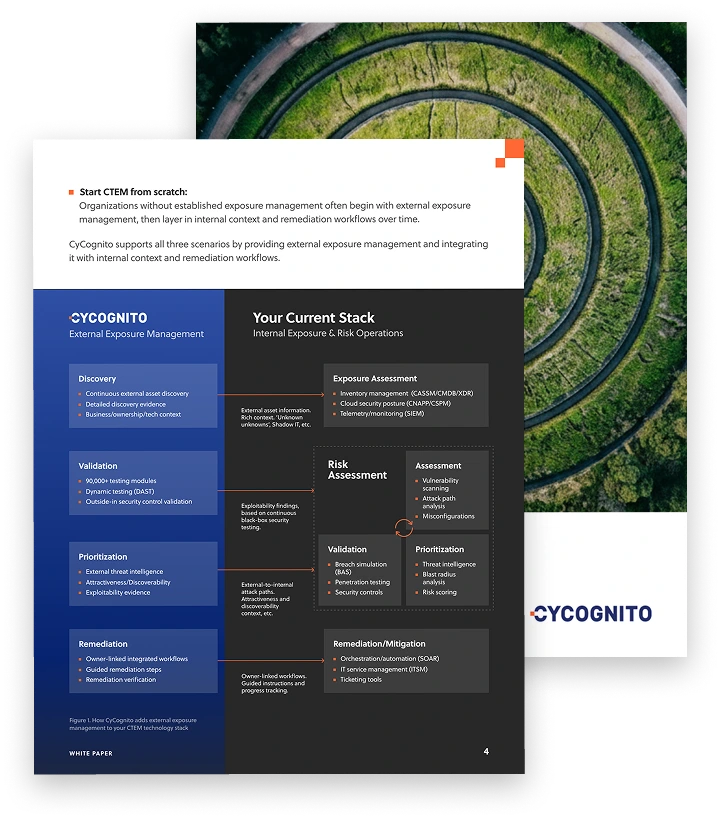
This whitepaper offers a practical starting point for operationalizing CTEM, covering what to measure, where to start, and what “good” looks like across the core steps.
CrowdStrike Falcon Bundles Pricing
Let’s review pricing and features included in CrowdStrike’s product bundles.
Note: CrowdStrike pricing is subject to change, and is accurate as of the time of this writing. For up-to-date information and more details, it is recommended to refer to the official pricing page.
Falcon Free Trial
Bundle pricing: CrowdStrike offers a 15-day free trial of its Falcon platform, giving organizations temporary access to core endpoint protection features without requiring a credit card.
Features included: The trial includes next-generation antivirus, device control, and mobile device protection capabilities.
Falcon Go
Bundle pricing: Falcon Go is priced at $29.99 per device annually, with a 30-day money-back guarantee.
Features included:
- Next-gen antivirus (Falcon Prevent), USB device control (Falcon Device Control), and mobile device protection (Falcon for Mobile).
- Falcon Go also comes with Express Support, offering rapid assistance for installation and management issues.
Falcon Pro
Pricing: Falcon Pro is is priced at $49.99 per device annually
Features included:
- Next-gen antivirus, device control, mobile device protection, and adds centralized firewall management for improved security enforcement across the organization.
- AI-driven antivirus through Falcon Prevent, delivering malware prevention supported by CrowdStrike’s intelligence. Device control and Falcon for Mobile extend protection to USB devices and mobile endpoints.
- Falcon Firewall Management provides the ability to create, deploy, and enforce host-based firewall policies from a single interface.
- Express Support to assist with deployment and troubleshooting.
Falcon Enterprise
Pricing: Falcon Enterprise is priced at $92.49 per device annually.
Features included
- All the features in Pro.
- Falcon Insight XDR, which provides real-time detection and response across endpoints and other data sources.
- Falcon OverWatch, which provides 24/7 threat hunting led by security experts.
Crowdstrike Falcon Pricing Comparison Table
| Bundle | Annual Price (Per Device) | Key Features | Target Audience |
|---|---|---|---|
| Falcon Free Trial | Free (15 days) | Next-gen antivirus, device control, mobile protection | Evaluation purposes |
| Falcon Go | $29.99 | Falcon Prevent (NGAV), USB device control, Falcon for Mobile, Express Support | Small businesses |
| Falcon Pro | $49.99 | All Go features plus Falcon Firewall Management, integrated intelligence | Mid-sized businesses |
| Falcon Enterprise | $92.49 | All Pro features plus Falcon Insight XDR (real-time detection and response), Falcon OverWatch (24/7 managed threat hunting) | Enterprises needing advanced detection |
| Falcon Premium | Custom pricing | All Enterprise features plus Threat Intelligence module and IT Hygiene for improved asset visibility and proactive threat detection | Enterprises focused on visibility and hygiene |
| Falcon Complete | Custom pricing | Full managed service with all core modules; includes deployment, monitoring, and response managed by CrowdStrike experts | Organizations without in-house SOC |
CrowdStrike vs. CyCognito
While both CrowdStrike Falcon Surface and CyCognito offer external attack surface management (EASM) capabilities, there are significant differences in approach, depth of automation, and risk validation.
CyCognito positions itself as a more comprehensive and autonomous platform, offering zero-input discovery and automated, unauthenticated security testing at scale. It offers a fully autonomous, zero-input platform with deep discovery, automated risk validation, and remediation planning, making it suitable for organizations seeking full visibility and precision without heavy manual input.
CrowdStrike Falcon Surface, based on its acquisition of Reposify, relies more heavily on passive discovery methods and customer-provided input, which can limit its ability to uncover unknown exposures. It provides foundational EASM capabilities and integrates with the broader Falcon ecosystem, but its reliance on manual configuration and passive discovery may limit visibility and effectiveness in dynamic environments.
Key comparison points:
| Feature | CyCognito | CrowdStrike Falcon Surface |
|---|---|---|
| Discovery Approach | Zero-input, autonomous discovery using OSINT and graph-based mapping | Requires seed data and manual tagging to identify assets |
| Testing Methodology | 90,000+ automated, unauthenticated black-box tests across OWASP Top 10, weak credentials, CVEs | Primarily passive scanning; lacks comprehensive agentless active testing |
| Coverage | Covers entire attack surface, including shadow IT, subsidiaries, SaaS, IaaS, and cloud environments | Limited to known assets and domain-based discovery |
| Risk Prioritization | Next-gen algorithm prioritizes <0.01% of issues as critical based on threat intelligence and exploitability | Limited by lack of active testing and contextual data |
| Remediation Tools | Includes automatic remediation validation, executive reporting, and integrations with tools like ServiceNow and Splunk | Lacks remediation validation and relies on manual reporting and export |
| Red Team Support | Accelerates red teaming with asset attribution and automated tests to reduce manual efforts | Requires red teams to spend time on basic asset discovery and testing |
| Business Context Mapping | Uses NLP and ML to automatically map organizations, subsidiaries, and asset ownership | Depends on customer input to identify business structure and related assets |