What Is Cloud Security Posture Management (CSPM)?
Cloud security posture management (CSPM) refers to security tools that identify, evaluate, and remediate misconfigurations and compliance risks across cloud infrastructures. As organizations move workloads to public, private, or hybrid clouds, their exposure to new types of cloud security vulnerabilities grows. CSPM tools automate the continuous assessment of cloud resources to help ensure that security and compliance standards are maintained without manual intervention.
By integrating with cloud platforms such as AWS, Azure, and Google Cloud, CSPM solutions offer visibility into how resources like databases, virtual machines, and storage are configured. These tools focus on detecting insecure settings, monitoring for policy violations, and providing actionable insights for remediation. They are foundational in managing risk and maintaining a secure cloud environment, complementing other security measures.
Here are the main reasons why CSPM is critical in modern cloud environments:
- Misconfiguration is the leading cause of cloud breaches: Many cloud breaches occur due to incorrect settings, such as open storage buckets or overly permissive access controls. CSPM tools continuously scan for these risks and alert teams before they’re exploited.
- Cloud environments are constantly changing: New services, workloads, and configurations are introduced daily. Manual reviews can’t keep up. CSPM provides real-time monitoring and enforcement of security baselines.
- Compliance requirements are evolving: CSPM helps automate compliance checks for standards like CIS benchmarks, PCI DSS, HIPAA, and GDPR. This reduces audit burdens and ensures that environments remain compliant over time.
- Limited visibility across multi-cloud environments: Managing security across multiple cloud providers is complex. CSPM tools unify visibility and control, reducing blind spots and inconsistencies.
- Faster detection and remediation of risks: By offering prioritized alerts and remediation steps, CSPM accelerates response times and reduces the window of exposure for cloud assets.
Core Functions of CSPM Tools
1. Asset Discovery and Visibility
Asset discovery is essential for effective cloud security because organizations cannot protect what they cannot see. CSPM tools automatically inventory all cloud assets across accounts, regions, and services, delivering a continuously updated view of the cloud environment. This centralized asset catalog helps security teams understand the attack surface, identify shadow IT, and spot unauthorized or rogue resources quickly.
Beyond discovery, visibility also means correlation of asset details, including owner, configuration state, and exposure level, across dynamic infrastructures. By surfacing how assets are interconnected, CSPM provides context behind potential vulnerabilities, making it easier to prioritize remediation efforts. Continuous visibility is vital for tight security governance in environments where assets are rapidly spun up and down.
2. Continuous Configuration Assessment
CSPM delivers ongoing assessment of cloud resource configurations against security best practices and organizational policies. Rather than relying on periodic manual audits, CSPM tools evaluate configuration changes in near real-time, offering immediate feedback on policy violations or emerging risks. This helps catch issues, such as improperly configured storage or overly permissive access, as soon as they occur.
Continuous assessment is important because cloud environments are in constant flux due to automation and self-service deployments. CSPM integrates with cloud provider APIs to monitor for misconfigurations triggered by infrastructure as code (IaC), user actions, or API calls, closing security gaps before attackers can exploit them. Proactive detection enables faster incident response and risk reduction.
3. Policy-Based Compliance Enforcement
To ensure organizational and regulatory standards are upheld, CSPM tools enforce security policies through pre-defined frameworks or custom rules. They automatically compare cloud configurations against industry benchmarks (such as CIS, PCI DSS, or HIPAA) and flag non-compliant resources for follow-up. Policy-based automation minimizes human error while ensuring consistent enforcement at cloud scale.
Compliance enforcement extends beyond initial setup; it is maintained as cloud environments evolve and new services are adopted. CSPM tools can also generate compliance reports and provide audit trails, which are critical for passing external audits and demonstrating due diligence. This systematic, automated compliance process reduces overhead and streamlines governance tasks for security teams.
4. Risk Prioritization and Contextual Analysis
CSPM solutions analyze misconfigurations and vulnerabilities in context, assigning risk levels based on factors such as resource sensitivity, exposure to the internet, or business criticality. This prioritization allows security teams to focus on the issues that matter most, rather than being overwhelmed by low-impact findings. Contextual insight bridges the gap between raw alerts and actionable risk management.
Effective risk prioritization also requires correlating cloud events with user actions, network flows, and application behavior to identify patterns indicative of true security threats. By highlighting relationships between risks and potential attack paths, CSPM helps organizations allocate resources efficiently and reduce the likelihood of successful breaches. This enables timely, targeted remediation.
5. Automated Remediation Workflows
CSPM platforms incorporate automation to accelerate the resolution of discovered misconfigurations, reducing mean time to remediation (MTTR). Automated workflows can revert resources to a secure state, apply recommended changes, or trigger notifications and tickets for further action. This hands-off approach is especially critical in scalable cloud environments, where manual fixes cannot keep up with the pace of change.
Automation not only improves response times but also enforces consistency in remediation practices, preventing recurring errors. However, it is essential that such workflows are customizable and support approval processes for sensitive actions. Thorough integration with ITSM and incident management platforms ensures closed-loop workflows from detection through to resolution, maintaining continuous cloud security.
CSPM and Its Relationship to Other Cloud Security Tools
CSPM vs. CWPP
Cloud workload protection platforms (CWPPs) focus on securing workloads, such as virtual machines, containers, and serverless functions, whereas CSPM secures cloud resource configurations and governance. While CWPP protects against runtime threats like malware and exploits targeting workloads, CSPM addresses misconfigurations, insecure policies, and compliance risks at the infrastructure level.
CWPP and CSPM are complementary, not interchangeable. CWPP solutions often employ behavioral monitoring and runtime analysis, detecting unusual activity within workloads. In contrast, CSPM tools do not analyze application or system behavior but instead focus on establishing and maintaining secure posture through continuous configuration assessment and policy enforcement.
CSPM vs. CASB
Cloud access security brokers (CASBs) are security controls that sit between users and cloud applications, providing visibility, data security, and threat protection for SaaS usage. While CSPM secures IaaS and PaaS resource configurations, CASBs are primarily for SaaS environments, enforcing access policies, monitoring data movement, and blocking risky behaviors in user interactions.
Despite some feature overlap, such as policy enforcement and visibility, CSPM and CASB operate at different layers of the cloud stack. Organizations often deploy both solutions to cover the full breadth of risk: CSPM for infrastructure-level configurations and CASB for application-level user and data activity. Used together, they address unique security challenges present in cloud services.
CSPM vs. CIEM
Cloud infrastructure entitlement management (CIEM) solutions specialize in detecting and remediating excessive or risky access privileges across cloud environments. While CSPM tools may include some access policy checks, CIEM dives deeper, analyzing complex identity and access relationships and uncovering privilege escalation or unused permissions at scale.
CIEM complements CSPM by focusing on the human and machine identities within the cloud, ensuring least privilege principles. Integration between CSPM and CIEM enables organizations to enforce holistic security: CSPM ensures secure resource configurations, while CIEM ensures only the right entities have the right access at the right time.
CSPM vs. CNAPP
Cloud-native application protection platforms (CNAPP) are unified security platforms that combine multiple cloud security capabilities, CSPM, CWPP, CIEM, and more, under a single roof. CNAPPs provide end-to-end protection spanning infrastructure, workloads, and identities, delivering coherent, contextualized security insights for modern application environments.
While CSPM is a core component of CNAPP, the latter’s scope is broader, enabling detection and remediation of risks across the entire lifecycle, from development to runtime. Organizations adopting CNAPP benefit from reduced tool sprawl and improved integration between traditionally siloed security disciplines.
CSPM vs. DSPM
Data security posture management (DSPM) solutions focus on discovering, classifying, and protecting sensitive data across cloud platforms, ensuring that data is stored, processed, and transmitted securely. While CSPM tools can identify insecure data storage configurations (like public S3 buckets), DSPM adds deep context about data types, usage patterns, and regulatory requirements.
DSPM and CSPM are both necessary for cloud security. CSPM secures the environment in which data resides, while DSPM safeguards the data itself. Integration between DSPM and CSPM streamlines detection of high-risk data exposures and empowers organizations to align posture management with data protection strategies.
Tips from the Expert

Rob Gurzeev, CEO and Co-Founder of CyCognito, has led the development of offensive security solutions for both the private sector and intelligence agencies.
- Baseline critical configurations during quiet periods: Capture secure configuration baselines during known-stable periods (e.g., after a major audit or release freeze). Use these as reference snapshots to detect drift or unauthorized changes over time, improving accuracy over default policy checks.
- Tag CSPM findings with business metadata: Enrich CSPM alerts with metadata like business unit, compliance impact, SLA tier, or application owner. This helps triage findings based on who owns the risk and what the potential business fallout is, streamlining prioritization and response routing.
- Create CSPM rule exceptions via policy-as-code: Not all violations require remediation, some deviations are intentional or risk-accepted. Use a policy-as-code approach to encode documented exceptions directly into the CSPM engine, reducing alert noise and maintaining audit traceability.
- Detect configuration drift from IaC templates: Regularly compare live cloud configurations against source-of-truth IaC templates (e.g., Terraform, CloudFormation) using CSPM-integrated drift detection. Flag resources that have been manually changed outside pipeline controls.
- Map alert suppression logic to attacker TTPs: Instead of suppressing “low-priority” alerts generically, build suppression rules around known attacker tactics, techniques, and procedures (TTPs). This ensures you don’t disable signals that could be chained in real-world attack paths.
Limitations and Challenges of CSPM
Handling Ephemeral Resources and Serverless Environments
Ephemeral resources, such as short-lived containers or serverless functions, challenge CSPM tools because these assets may appear and disappear within seconds, often before traditional discovery and assessment cycles can run. This transience creates security blind spots where misconfigurations or vulnerabilities remain undetected until after the resource is terminated.
To keep pace, CSPM vendors are building integrations that detect changes in real-time and scan infrastructure-as-code templates before deployment. However, visibility gaps still exist, particularly with certain serverless architectures and rapidly scaling event-driven workloads. A layered approach—combining CSPM with runtime monitoring—remains necessary for effective risk coverage in ephemeral cloud environments.
Dealing with API Sprawl and Multi-Cloud Scale
Modern environments use hundreds of APIs across multiple cloud providers, making centralized management and security enforcement difficult. Each provider introduces unique APIs, controls, and permissions, resulting in “API sprawl” and configuration fragmentation, which complicates posture management.
CSPM tools must support integration across cloud platforms and adapt to rapidly evolving provider features. Scaling discovery, assessment, and enforcement consistently across diverse, multi-cloud infrastructures remains a top challenge. Addressing API sprawl requires standardized interfaces, consistent tagging, and continuous improvement of integration capabilities within CSPM solutions.
Reducing Alert Fatigue and Improving Signal-to-Noise Ratio
High volumes of alerts from CSPM tools can overwhelm security teams, especially when many alerts are low-impact or repetitive. This “alert fatigue” lowers response rates and increases the risk of missing true threats. Distinguishing between critical misconfigurations and benign deviations is vital for effective posture management.
Optimizing the signal-to-noise ratio requires intelligent alert correlation, risk-based prioritization, and integration with incident management workflows. Modern CSPM platforms employ machine learning and contextual analysis to suppress false positives and highlight actionable findings, but careful tuning and ongoing customization are still necessary to align alerts with real business risks.

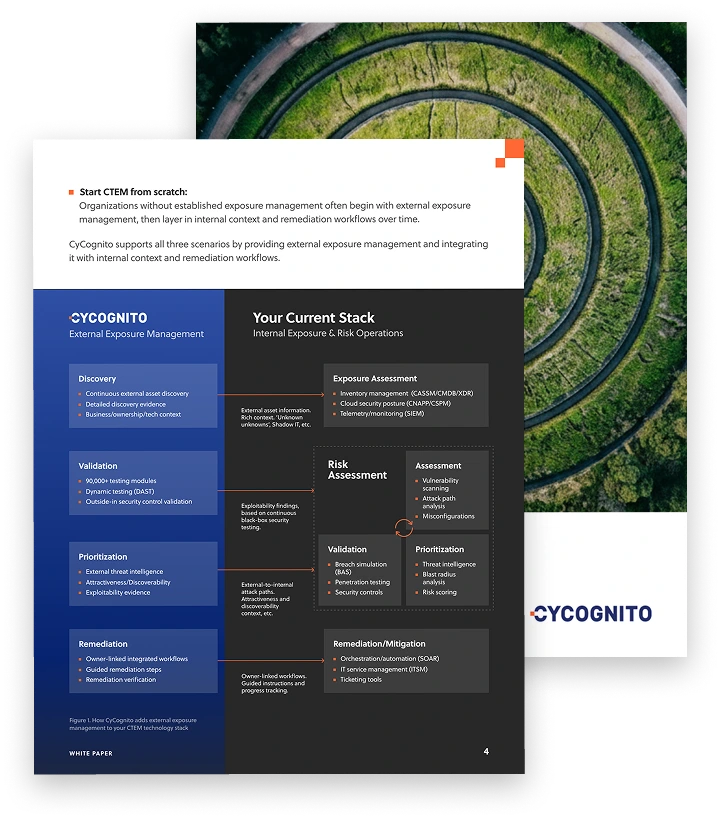
Operationalizing CTEM Through External Exposure Management
CTEM breaks when it turns into vulnerability chasing. Too many issues, weak proof, and constant escalation…
This whitepaper offers a practical starting point for operationalizing CTEM, covering what to measure, where to start, and what “good” looks like across the core steps.
CSPM Implementation Best Practices
1. Continuously Align with Compliance Frameworks
Effective CSPM usage requires proactive alignment with industry and regulatory compliance frameworks. Organizations should configure CSPM tools to evaluate environments against relevant standards, such as SOC 2, NIST, or GDPR, and update policies as regulations or business requirements change. Continuous compliance monitoring ensures that cloud deployments remain secure and audit-ready.
Frequent reviews of compliance controls and automated reporting reduce manual effort while maintaining transparency for auditors and stakeholders. Teams should customize policies to meet their unique risk profiles and take advantage of CSPM’s ability to generate evidentiary artifacts for compliance validation during external reviews.
2. Prioritize Risks Using Contextual Analysis
Contextual risk analysis allows organizations to focus limited resources on the most impactful issues. Instead of treating all misconfigurations equally, teams should leverage CSPM features that consider the business context, asset criticality, and true exposure of each finding before assigning remediation priorities.
Implementing context-aware risk models and custom tags in CSPM tools improves visibility into the operational impact of vulnerabilities. This enables more effective mitigation strategies, reduces noise from low-value alerts, and ensures that remediation efforts are tightly aligned with business and security objectives.
3. Integrate CSPM Findings into CI/CD and DevSecOps Pipelines
Embedding CSPM into CI/CD and DevSecOps workflows enables detection and remediation of misconfigurations before resources are deployed to production. By integrating CSPM checks into build, test, and release pipelines, organizations can catch policy violations early, reducing the risk of introducing insecure infrastructure components.
Automated feedback loops, such as blocking builds with critical misconfigurations, reinforce secure-by-design principles. Enabling development teams to access CSPM findings directly in their existing tools improves awareness, supports remediation ownership, and ensures cloud posture is continuously managed throughout the application lifecycle.
4. Use Automation to Remediate Recurring Misconfigurations
Automation streamlines the remediation of common or recurring misconfigurations detected by CSPM tools, reducing manual workloads and shortening exposure windows. Automated playbooks or response scripts not only accelerate incident response but also standardize fixes, minimizing the risk of human error and inconsistency.
Organizations should carefully plan and test automated remediation logic to avoid disruptions and maintain audit trails of all changes. Integrating CSPM with ticketing systems ensures that sensitive or complex issues are routed for approval and manual investigation as needed, balancing speed with operational control.
5. Educate Teams and Establish Shared Responsibility for Cloud Posture
CSPM tools are most effective when organizational teams understand their importance and participate in security best practices. Ongoing security education, including hands-on training with CSPM dashboards and findings, helps developers and operators recognize misconfigurations and act quickly when risks emerge.
Shared responsibility must be established through clear policies, defined ownership for cloud resources, and collaboration across security, development, and operations. Embedding CSPM into daily workflows and performance metrics creates a culture of continuous improvement and accountability in cloud security posture management.
Complementing CSPM with CyCognito
CSPM is necessary, but it is not sufficient. Its visibility largely stops at what exists inside your cloud accounts. Attackers do not respect those boundaries. They operate from the outside in, targeting whatever is exposed to the internet, whether it is well-governed cloud infrastructure, forgotten assets, or systems that were never brought under CSPM control in the first place.
CyCognito external exposure management platform complements CSPM by focusing on external exposure management and attack surface management from the attacker’s perspective. Instead of relying on cloud account integrations alone, CyCognito continuously discovers and maps everything your organization exposes externally, including cloud resources, applications, APIs, domains, certificates, and third-party dependencies that often fall outside CSPM visibility.
Where CSPM identifies insecure configurations within known cloud environments, CyCognito answers a different and critical question: what can an attacker actually see and reach from the internet, and how can those exposures be chained into real attack paths?
In practice, CyCognito extends CSPM value in several key ways:
- Discovery beyond cloud account boundaries to identify unknown, unmanaged, or forgotten assets that CSPM cannot inventory
- External exposure analysis that highlights which cloud misconfigurations are truly reachable and exploitable from the outside
- Attack path modeling to show how cloud issues, identity weaknesses, and application exposures combine into realistic breach scenarios
- Risk-based prioritization that helps teams fix externally exploitable issues first, not just policy violations in isolation
- Continuous monitoring of change to detect when new cloud deployments or third-party integrations introduce new external attack vectors
This distinction matters. Many cloud breaches do not occur because a misconfiguration exists, but because that misconfiguration is externally exposed and connected to other weaknesses. CSPM surfaces posture issues. CyCognito contextualizes them within the broader external attack surface and shows how they can actually be exploited.
Together, CSPM and CyCognito support a modern CTEM approach. CSPM maintains secure cloud posture internally. CyCognito reduces external exposure and breaks attack paths before attackers can use them. Treating these as overlapping tools is a mistake. Treating them as complementary controls is how organizations close the gap between configuration hygiene and real-world attack prevention.